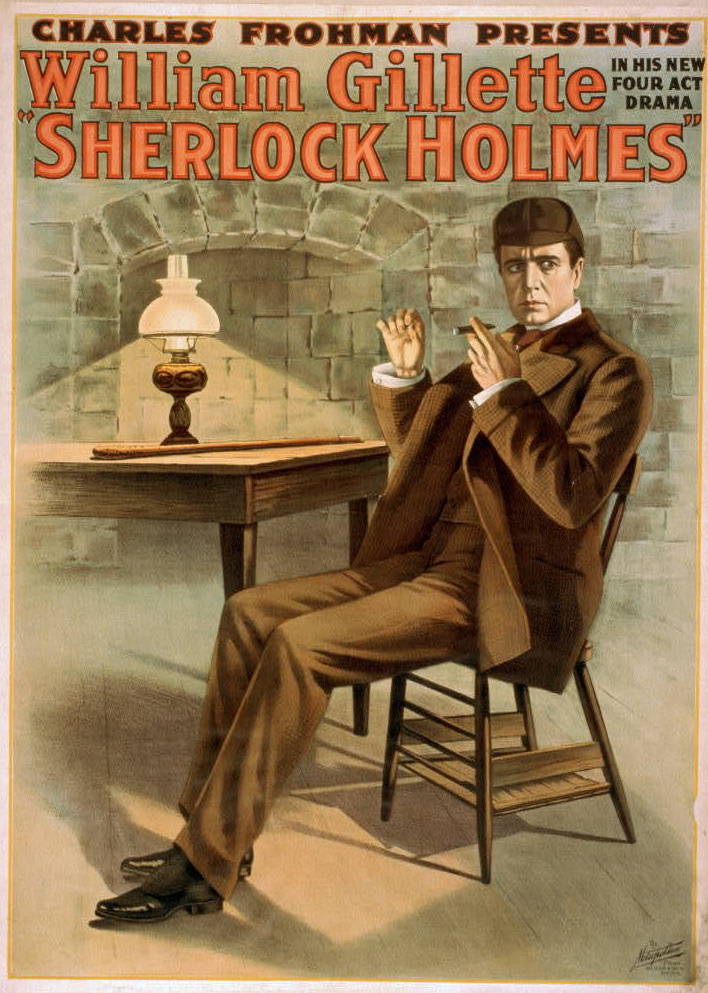
For nearly a century, one of the greatest minds in fictional history was held captive by an adversary more formidable than Professor Moriarty: the American legal system.
When the calendar flipped to January 1, 2023, the remaining copyright protections on Sir Arthur Conan Doyle’s work officially expired. After decades of aggressive cease-and-desist letters, licensing fee disputes, and landmark court battles, the world’s most famous consulting detective finally became 100% public property.
The Masterpiece of Legal Strategy: The Conan Doyle Estate
To understand why the 2023 milestone was such a massive deal, you have to look at the incredibly clever—and fiercely protective—legal strategy deployed by the Sir Arthur Conan Doyle Literary Estate.
By the early 2000s, the vast majority of Sherlock Holmes stories were already in the public domain. Anyone could legally print A Study in Scarlet or The Adventures of Sherlock Holmes. However, the estate clung to a final handful of short stories published in the late 1920s, compiled in The Case-Book of Sherlock Holmes.
The estate’s legal argument was brilliant but highly restrictive: they claimed that because Conan Doyle was still developing Sherlock’s character traits in those final stories, the character of Sherlock Holmes as a whole was not yet complete. Therefore, they argued, anyone using Sherlock Holmes in a new book, movie, or play was infringing on the copyrighted, “incomplete” portion of the character.
For decades, this argument worked. Major studios and independent authors alike paid thousands of dollars in licensing fees simply to avoid a costly lawsuit.
The Rebellion: Leslie S. Klinger v. Conan Doyle Estate
The corporate chokehold on Baker Street began to fracture in 2013, thanks to a prominent Sherlockian scholar named Leslie S. Klinger. Klinger was co-editing an anthology of new, original Holmes stories titled In the Company of Sherlock Holmes when the estate demanded a licensing fee.
Instead of paying, Klinger sued.
The resulting Seventh Circuit Court of Appeals case became a landmark moment in intellectual property law. The court decisively ruled that pre-1923 elements of Sherlock Holmes were entirely free to use. The judge famously declared that a character cannot remain copyrighted just because an author writes a later sequel.
However, a strict catch remained: any specific personality traits or plot points introduced only in the post-1923 stories remained strictly off-limits. For example, if a writer depicted Sherlock showing a newfound warmth toward Watson, or a sudden affection for dogs (traits highlighted in the final stories), the estate could still sue.
The Enola Holmes Disruption
The absurdity of this split-personality copyright reached its peak in 2020. Netflix released the movie Enola Holmes, centering on Sherlock’s younger sister. The Conan Doyle Estate promptly filed a lawsuit against Netflix, author Nancy Springer, and the production company.
The basis of the lawsuit? Sherlock smiled too much.
The estate argued that in the public domain stories, Holmes was notoriously cold, calculating, and emotionless. It wasn’t until the final, copyrighted stories—after Conan Doyle had lost his son in World War I—that the author gave Holmes a softer, more empathetic demeanor capable of respecting women and showing genuine emotion. By making Henry Cavill’s portrayal of Sherlock warm and kind to his sister, Netflix was allegedly stealing copyrighted material.
The lawsuit was eventually dismissed with prejudice (settled out of court), but it highlighted the tightrope creators had to walk.
January 2023: Total Liberation
When The Case-Book of Sherlock Holmes entered the public domain in 2023, the legal tightrope snapped.
Today, creators no longer have to cross-reference their manuscripts with publication timelines to ensure Sherlock isn’t being “too nice” or showing an interest in canine psychology. Every deduction, every mood swing, every friendship, and every single word penned by Sir Arthur Conan Doyle is public property.
What This Means for Creators: You can write a novel where Sherlock teams up with modern detectives, launch a comic book series exploring his retirement years, or produce a film dissecting his deepest emotional vulnerabilities.
The game is finally, completely, afoot. The corporate gates have fallen, and the world’s greatest detective belongs exactly where he always felt most at home: out in the public square, available to anyone with a mystery to solve.