• Skip to main content
  • Skip to primary sidebar

Public Domain Watch

publicdomainwatch

The Evolution of a Bear: How Winnie-the-Pooh Conquered Literature, Hollywood, and the Public Domain

June 30, 2026 by publicdomainwatch

For a creature self-described as a “Bear of Very Little Brain,” Winnie-the-Pooh possesses an astonishing amount of cultural power. What began as a father’s whimsical bedtime stories for his son has transformed into a multi-billion-dollar global franchise, a landmark case study in intellectual property law, and a symbol of creative liberation in the public domain era.

Pooh’s journey from a quiet forest in England to the center of a modern copyright revolution reveals how much a simple teddy bear can teach us about the business of art.

1. The Real-Life Origins of the Hundred Acre Wood

The magic of Winnie-the-Pooh lies in how deeply it was rooted in the real world of British author A.A. Milne and his son, Christopher Robin Milne.

Christopher Robin’s favorite stuffed bear, originally named Edward, was renamed “Winnie” after a real-life Canadian black bear named Winnipeg, whom the family frequently visited at the London Zoo. The “Pooh” part of the name came from a swan the family met on vacation.

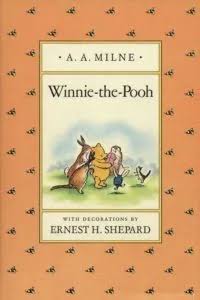
When Milne published the original book Winnie-the-Pooh in 1926, he paired his gentle, philosophical prose with the delicate line-art illustrations of E.H. Shepard. Shepard famously based the visual design of Pooh not on Christopher Robin’s actual toy, but on “Growler,” a plush bear belonging to his own son. Together, Milne and Shepard created a timeless, comforting sanctuary of childhood innocence.

2. The Disney Empire and the “Red Shirt” Transformation

In the 1930s, an American producer named Stephen Slesinger purchased the US and Canadian merchandising rights to the characters. It was during this era that Pooh was first drawn wearing a red shirt for an audio-record cover.

In 1961, The Walt Disney Company acquired those rights, dropped the hyphens from “Winnie-the-Pooh,” and unleashed a multi-billion-dollar licensing juggernaut.

Disney fundamentally altered Pooh’s visual and cultural identity:

  • They traded E.H. Shepard’s sketchy, muted line art for a vibrant, smooth animation style.
  • They gave Pooh bright yellow fur and solidified the iconic red crop-top shirt as his definitive look.
  • They introduced new, animated characters like Gopher and brought the characters to life with unforgettable, soft American vocal performances.

For generations of children, the bright, red-shirted Disney cartoon completely replaced the original literary bear in the global consciousness.

3. The Public Domain Split: 1926 vs. Disney

The legal status of Winnie the Pooh drastically shifted on January 1, 2022, when A.A. Milne’s original 1926 book hit its 95-year copyright limit in the United States, officially entering the public domain.

This historic milestone split the character cleanly in two, creating a highly specific legal boundary that modern creators have to navigate meticulously.

What is Public Domain (Free to Use)What is Still Copyrighted (Owned by Disney)
• The original 1926 book text and stories.• The bright red crop-top shirt design.
• E.H. Shepard’s original line-art illustrations.• Disney’s specific animated character designs and voices.
• Original characters: Pooh, Piglet, Eeyore, Rabbit, Kanga, Roo, and Owl.• Disney-exclusive characters like Gopher.
• Tigger (entered the public domain in 2024 via The House at Pooh Corner).• Subsequent Disney movies, scripts, and songs (like the famous theme song).

The Immediate Fallout: The minute the 1926 copyright expired, independent creators jumped. The most famous (and jarring) result was the indie horror film Winnie-the-Pooh: Blood and Honey. Because the filmmakers were strictly limited to the 1926 book, their killer version of Pooh wore a lumberjack flannel shirt instead of a red t-shirt, and Tigger had to be completely excluded from the first film because his character was still under copyright until 2024.

4. The Future of the Bear

As time moves forward, the corporate locks on the Hundred Acre Wood continue to rust away. Modern entertainment is entering an era where large-scale, high-quality independent projects—like Kartoon Studios’ upcoming 3D animated Hundred Acre Wood series—can openly compete with Disney’s version by drawing direct inspiration from Milne’s original text.

While Disney still holds active trademarks that prevent creators from using the “Winnie the Pooh” name to pass off bootleg merchandise as official corporate products, they no longer own the exclusive rights to the soul of the character.

Nearly a century after his birth, the silly old bear has broken out of the studio vaults. He belongs to the public square once again, proving that great stories can survive censorship, commercialization, and the passing of generations to find a brand-new life in the hands of everyday creators.
Filed Under: Books

From Flapper to Foodie: The 1930 Liberation of Blondie and Dagwood

June 29, 2026 by publicdomainwatch

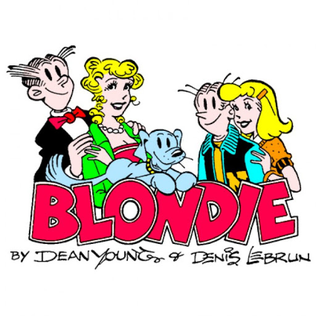
When Chic Young launched a new comic strip for King Features Syndicate in September 1930, the United States was sinking into the grim realities of the Great Depression. Audiences were desperate for an escape, and Young gave them exactly what they wanted: an irreverent, screwball romance between a bubbly jazz-age flapper and a bumbling, wealthy heir.

Ninety-five years later, the original 1930 newspaper strips entered the public domain. This opens a fascinating window for modern creators to look back at the origins of Blondie—a strip that would eventually become one of the most widely syndicated comics in history, but started out looking fundamentally different from the suburban family dynamic we know today.

The 1930 Dynamic: Before the Wedding and the Sandwich

For anyone who grew up reading Blondie in Sunday newspapers, the 1930 public domain material offers a massive culture shock. The foundational elements of the comic were completely flipped on their head.

In 1930, Blondie’s last name wasn’t Bumstead—it was Blondie Boopadoop. True to the flapper trend of the era, she was a gold-digging, fun-loving girl who spent her time in dance halls and high-society hotels.

Dagwood Bumstead, meanwhile, wasn’t a stressed-out corporate drone terrified of his boss, Mr. Dithers. He was the literal heir to a multi-billion-dollar industrial railroad empire. His incredibly wealthy parents, J. Bolling and Henrietta Bumstead, spent the earliest strips deeply embarrassed by their son’s infatuation with a working-class flapper, constantly trying to break the couple apart.

What is Legal to Use (and What is Still Locked Away)

Because only the 1930 material is in the public domain, creators looking to adapt or reprint Blondie have to navigate a very specific chronological boundary.

The Missing Icons:

  • The Marriage: Dagwood’s parents eventually disown him for marrying Blondie, cutting him off from the family fortune and forcing him into the working class. However, this iconic wedding didn’t happen until 1933. The 1930 public domain version features them strictly as an unmarried, dating couple.
  • The Dagwood Sandwich: Dagwood’s legendary, gravity-defying midnight snack—piled high with systematic layers of cold cuts, cheeses, and leftovers—did not become a running gag until the mid-1930s.
  • The Kids and Daisy: The Bumstead children, Alexander (originally Baby Dumpling) and Cookie, along with their loyal dog Daisy, were born years later in the strip’s timeline and remain fully protected by copyright.

The Visual Inspiration for Betty Boop?

One of the most persistent debates among comic historians involves the uncanny connection between Blondie Boopadoop and the animated character Betty Boop, who also debuted in August 1930.

While Max Fleischer’s animation studio claimed Betty was a caricature of singer Helen Kane, the striking similarity in their names, visual flapper aesthetics, and identical catchphrases (“Boop-oop-a-doop”) caused immense confusion in the 1930s. Because both characters’ debut years are now in the public domain, creators can freely explore, parody, or crossover these twin icons of jazz-age pop culture without corporate intervention.

Why the 1930 Era Matters for Creators

The entry of Blondie into the public domain isn’t just a win for comic historians; it’s a goldmine for independent writers and artists.

Stripped of its later, safe suburban domesticity, the 1930 Blondie is an edgy, fast-paced satire of American class warfare at the dawn of the Great Depression. Modern creators have the legal freedom to take these original, raw iterations of Blondie and Dagwood and drop them into entirely new mediums—whether that’s an animated series capturing the authentic 1930s jazz culture, or a graphic novel exploring the high-society drama of the Bumstead family empire before the inheritance vanished.

The corporate lock has broken, allowing the world’s most enduring comic couple to be reimagined for a brand-new century.

Filed Under: Comics

Case Closed: How Sherlock Holmes Finally Escaped Copyright Prison

June 29, 2026 by publicdomainwatch

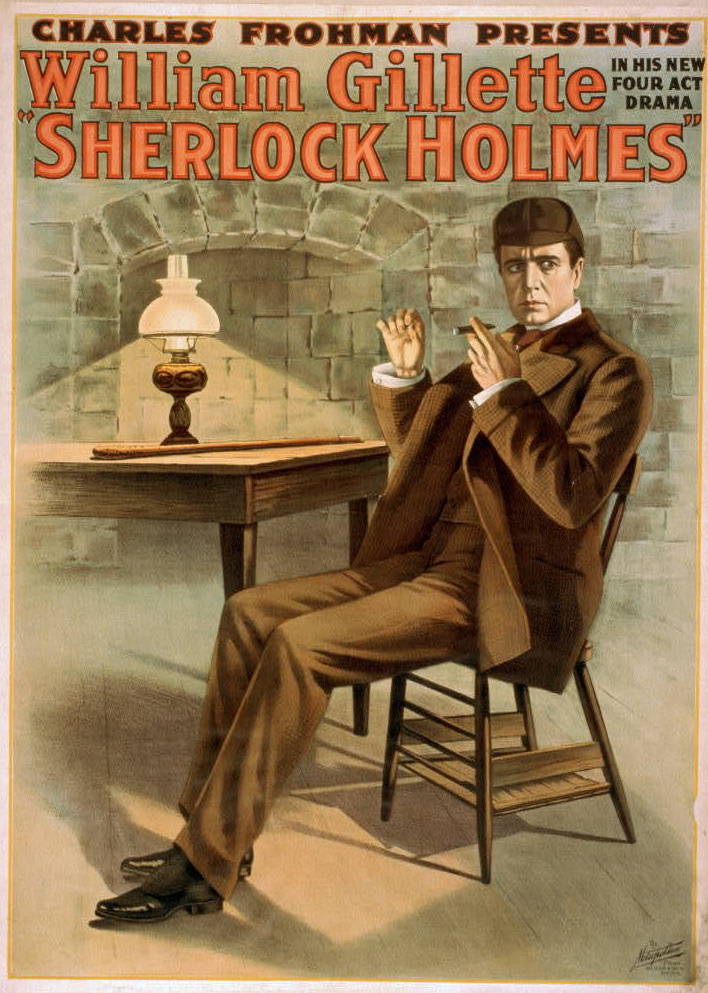
For nearly a century, one of the greatest minds in fictional history was held captive by an adversary more formidable than Professor Moriarty: the American legal system.

When the calendar flipped to January 1, 2023, the remaining copyright protections on Sir Arthur Conan Doyle’s work officially expired. After decades of aggressive cease-and-desist letters, licensing fee disputes, and landmark court battles, the world’s most famous consulting detective finally became 100% public property.

The Masterpiece of Legal Strategy: The Conan Doyle Estate

To understand why the 2023 milestone was such a massive deal, you have to look at the incredibly clever—and fiercely protective—legal strategy deployed by the Sir Arthur Conan Doyle Literary Estate.

By the early 2000s, the vast majority of Sherlock Holmes stories were already in the public domain. Anyone could legally print A Study in Scarlet or The Adventures of Sherlock Holmes. However, the estate clung to a final handful of short stories published in the late 1920s, compiled in The Case-Book of Sherlock Holmes.

The estate’s legal argument was brilliant but highly restrictive: they claimed that because Conan Doyle was still developing Sherlock’s character traits in those final stories, the character of Sherlock Holmes as a whole was not yet complete. Therefore, they argued, anyone using Sherlock Holmes in a new book, movie, or play was infringing on the copyrighted, “incomplete” portion of the character.

For decades, this argument worked. Major studios and independent authors alike paid thousands of dollars in licensing fees simply to avoid a costly lawsuit.

The Rebellion: Leslie S. Klinger v. Conan Doyle Estate

The corporate chokehold on Baker Street began to fracture in 2013, thanks to a prominent Sherlockian scholar named Leslie S. Klinger. Klinger was co-editing an anthology of new, original Holmes stories titled In the Company of Sherlock Holmes when the estate demanded a licensing fee.

Instead of paying, Klinger sued.

The resulting Seventh Circuit Court of Appeals case became a landmark moment in intellectual property law. The court decisively ruled that pre-1923 elements of Sherlock Holmes were entirely free to use. The judge famously declared that a character cannot remain copyrighted just because an author writes a later sequel.

However, a strict catch remained: any specific personality traits or plot points introduced only in the post-1923 stories remained strictly off-limits. For example, if a writer depicted Sherlock showing a newfound warmth toward Watson, or a sudden affection for dogs (traits highlighted in the final stories), the estate could still sue.

The Enola Holmes Disruption

The absurdity of this split-personality copyright reached its peak in 2020. Netflix released the movie Enola Holmes, centering on Sherlock’s younger sister. The Conan Doyle Estate promptly filed a lawsuit against Netflix, author Nancy Springer, and the production company.

The basis of the lawsuit? Sherlock smiled too much.

The estate argued that in the public domain stories, Holmes was notoriously cold, calculating, and emotionless. It wasn’t until the final, copyrighted stories—after Conan Doyle had lost his son in World War I—that the author gave Holmes a softer, more empathetic demeanor capable of respecting women and showing genuine emotion. By making Henry Cavill’s portrayal of Sherlock warm and kind to his sister, Netflix was allegedly stealing copyrighted material.

The lawsuit was eventually dismissed with prejudice (settled out of court), but it highlighted the tightrope creators had to walk.

January 2023: Total Liberation

When The Case-Book of Sherlock Holmes entered the public domain in 2023, the legal tightrope snapped.

Today, creators no longer have to cross-reference their manuscripts with publication timelines to ensure Sherlock isn’t being “too nice” or showing an interest in canine psychology. Every deduction, every mood swing, every friendship, and every single word penned by Sir Arthur Conan Doyle is public property.

What This Means for Creators: You can write a novel where Sherlock teams up with modern detectives, launch a comic book series exploring his retirement years, or produce a film dissecting his deepest emotional vulnerabilities.

The game is finally, completely, afoot. The corporate gates have fallen, and the world’s greatest detective belongs exactly where he always felt most at home: out in the public square, available to anyone with a mystery to solve.

Filed Under: Books

Banned, Burned, and Liberated: The Radical Legacy of “Lady Chatterley’s Lover”

June 28, 2026 by publicdomainwatch

When D.H. Lawrence privately published Lady Chatterley’s Lover in Florence, Italy, in 1928, he knew it would cause a stir. He likely didn’t realize it would spark one of the most significant freedom-of-speech battles in literary history—a fight that would stretch across multiple continents and take over three decades to resolve.

When the novel finally entered the public domain, it marked the ultimate liberation of a text that spent most of its existence hidden in brown paper bags, confiscated by customs agents, and denounced on senate floors.

The Plot That Scandalized the Globe

At its core, Lady Chatterley’s Lover is a story about the emotional, intellectual, and physical awakening of Constance Chatterley (Lady Chatterley).

Constance’s husband, Sir Clifford, returns from World War I paralyzed from the waist down and emotionally shattered. As Clifford retreats into the cold, intellectual world of industrial capitalism and coal-mine ownership, Constance grows profoundly isolated.

She finds solace—and eventually, an intense, earthshattering passion—in Oliver Mellors, the estate’s working-class gamekeeper. Their affair becomes a profound exploration of physical intimacy and raw human connection.

Why It Was Banned: The Two Ultimate Taboos

To modern readers accustomed to contemporary romance, the censorship of Lawrence’s novel might seem quaint. But in 1928, Lawrence violated two of the most rigid boundaries of British and American society simultaneously: class and language.

1. Crashing the Class Barrier

The British establishment was deeply threatened by the romantic and physical pairing of an aristocratic lady with a working-class servant. Lawrence painted the upper class as intellectually dead and spiritually bankrupt, suggesting that true vitality lay in the physical laborers who still maintained a connection to the earth.

2. Taboo Vocabulary

Lawrence did not rely on euphemisms or closed-door scenes. He used explicit, four-letter Anglo-Saxon words to describe sexual acts and anatomy. Lawrence argued that these words had been “puritanized” and corrupted by shame, and he sought to cleanse them by using them in a context of genuine, tender love. The censors, predictably, did not agree.

The Trial That Changed Literature Forever

For over thirty years, the book could only be legally purchased in heavily expurgated (censored) editions, with all sexual descriptions and language completely scrubbed.

The turning point came in 1960, when Penguin Books decided to publish the full, unexpurgated version in the United Kingdom, deliberately challenging the newly passed Obscene Publications Act. What followed was a sensational, media-frenzied trial at the Old Bailey.

The Infamous Prosecution: The prosecutor, Mervyn Griffith-Jones, famously asked the jury a question that instantly backfired, encapsulating how out-of-touch the establishment was: “Is it a book that you would even wish your wife or your servants to read?”

Penguin Books fought back by calling an army of literary critics, academic scholars, and even theologians (including the Bishop of Woolwich) to testify to the book’s high literary and moral value.

The jury returned a verdict of not guilty. The decision was a watershed moment: it effectively ended literary censorship in the UK, paved the way for the sexual revolution of the 1960s, and allowed authors around the world to write about human relationships with unprecedented honesty. A similar legal victory in the United States in 1959 had already cleared the book for distribution across the Atlantic.

The Public Domain Era: Reclaiming Lawrence

Now that Lady Chatterley’s Lover has entered the public domain, it is no longer a forbidden object or a legal battleground. It belongs entirely to the public.

This freedom allows modern creators, filmmakers, and publishers to revisit the text without the lingering shadow of the 20th-century censorship wars. Stripped of its shock value, contemporary audiences can finally see the novel for what D.H. Lawrence always intended it to be: not a piece of cheap obscenity, but a beautiful, fiercely protective defense of individual tenderness in an increasingly cold, mechanical world.

Filed Under: Books

The Master of Shadow: Sourcing Rembrandt for Modern Design & Apparel

June 27, 2026 by publicdomainwatch

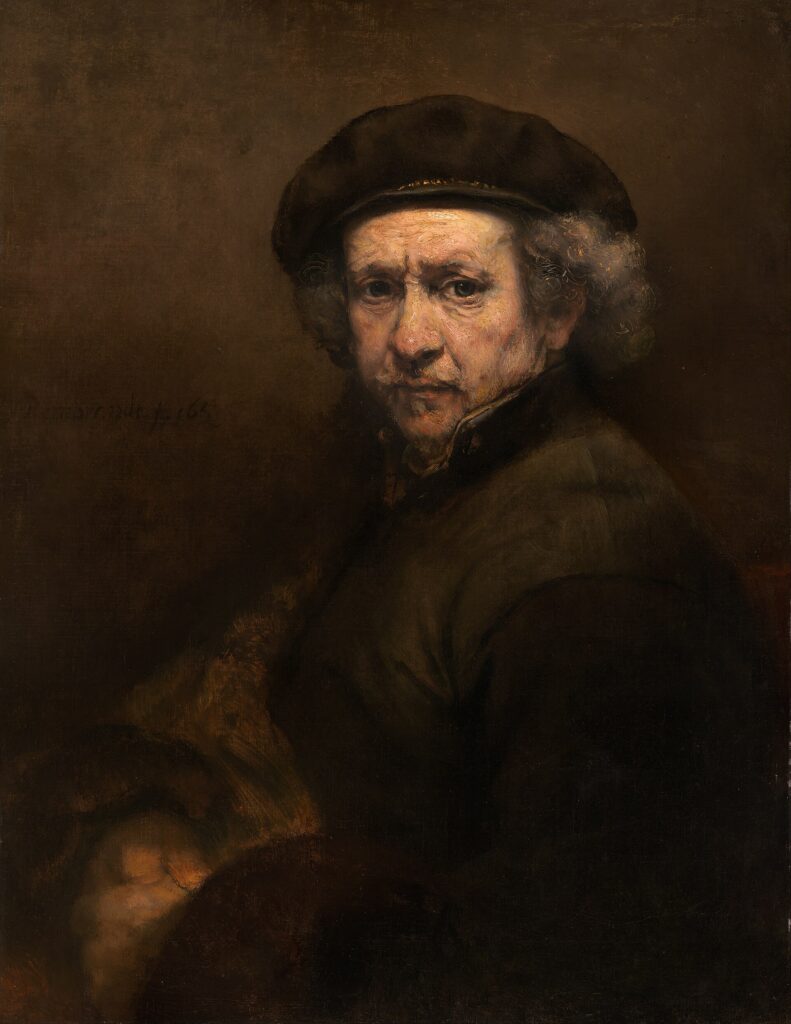
The dramatic, high-contrast style of Rembrandt van Rijn is experiencing a massive resurgence. From dark academia streetwear brands printing moody oil portraits onto heavy-grain hoodies to indie game developers analyzing his mastery of light, his work is highly sought after by modern creators.

Because Rembrandt passed away in 1669, his entire catalog is universally in the public domain. However, actually obtaining high-resolution, print-ready files of his work in 2026 requires navigating a hidden landscape of museum restrictions, contract law, and digitization traps.

This guide breaks down how to source Rembrandt’s masterpieces legally and safely for commercial use.

The Legal Reality: 1669 vs. 2026

When dealing with a master who has been dead for over 350 years, copyright law itself is not your obstacle. The hurdle lies in how you acquire the digital file.

  • The Original Art: Universally public domain. No estate, museum, or government can claim copyright over the physical paint applied by Rembrandt in the 17th century.
  • The Digitization Trap: While a landmark legal case (Bridgeman Art Library v. Corel Corp.) established that exact, two-dimensional photographic copies of public domain art do not create a new copyright in the US, many European museums operate under different legal frameworks. More importantly, they use Terms of Service (ToS) rather than copyright law to restrict usage.
  • Contract Law vs. Copyright Law: If you download a high-resolution image directly from a museum’s website, you often must check a box agreeing to their Terms of Service. If those terms say “Non-Commercial Use Only,” you can be sued for breach of contract, even if the artwork itself is completely free of copyright.

Safe Sourcing Strategies for Creators

To use Rembrandt’s work on retail apparel, album covers, or digital assets without legal risk, you must source from institutions that explicitly waive both copyright and contractual restrictions.

1. The Rijksmuseum (Amsterdam)

The gold standard for Rembrandt sourcing is the Rijksmuseum, which holds the world’s most significant collection of his work, including The Night Watch and The Jewish Bride.

  • The Policy: Through their “Rijksstudio” initiative, the museum has placed hundreds of thousands of high-resolution images into the public domain under a Creative Commons Zero (CC0) designation.
  • The Access: You can create a free account, download maximum-resolution files, and use them commercially for apparel design, digital printing, or product packaging with zero licensing fees.

2. The National Gallery of Art (Washington, D.C.)

Another incredibly safe depository for American and international commercial projects.

  • The Policy: The NGA implements an open-access policy for all images of works in its collection believed to be in the public domain.
  • The Access: Images can be downloaded directly from their web catalog without registration, and the museum explicitly permits commercial reproduction without further clearance.

3. Creative Commons Zero (CC0) Metasearch Tools

Platforms like Wikimedia Commons or CC Search aggregate open-access museum files. When using these, always trace the image source back to the hosting institution to verify that a CC0 or public domain mark was officially applied by the museum holding the physical piece.

Technical Best Practices for Print & Apparel

Rembrandt’s signature style relies heavily on chiaroscuro—the intense contrast between deep, velvety shadows and bright, directional light. This creates specific challenges when transferring digital files to physical products.

  • The Black Ink Problem (Direct-to-Garment): Rembrandt’s backgrounds are rarely pure black; they are composed of warm umbers, deep ochres, and complex browns. When printing on black apparel via Direct-to-Garment (DTG), standard printer software may attempt to lay down a thick white underbase beneath these dark tones, resulting in a muddy, heavy plastisol feel.
  • The Fix: Work with a printer who can employ “black garment blending,” where the darkest tones of the painting are set to transparent, allowing the natural fabric of the black t-shirt or hoodie to serve as the shadow layer.
  • Color Profile Synchronization: Museum files are typically exported in Adobe RGB to preserve the absolute maximum color depth of the oil pigments. However, most commercial textile printers require CMYK profiles. Always convert your workspace to a high-fidelity CMYK profile (such as GRACoL or Coated FOGRA) to ensure the rich golds and skin tones do not turn gray or dull during production.

Ethical Considerations & Best Practices

While you are legally free to crop, glitch, colorize, or collage Rembrandt’s work for your brand, maintaining high-fidelity sourcing records is crucial.

Keep a dedicated digital ledger containing the direct URL of the open-access museum catalog where you obtained the file, along with a screenshot of the page displaying the CC0 or public domain status. If an online marketplace or payment processor flags your product for IP review, presenting this documentation will typically resolve the issue within hours.

Filed Under: Art

  • Page 1
  • Page 2
  • Page 3
  • Interim pages omitted …
  • Page 6
  • Go to Next Page »

Primary Sidebar

Categories

  • Art
  • Books
  • Cartoons
  • Comics
  • Film
  • Folktales
  • Music

Copyright © 2026 · Genesis Sample on Genesis Framework · WordPress · Log in