• Skip to main content
  • Skip to primary sidebar

Public Domain Watch

Cartoons

The Steamboat Willie Bible: Sourcing 1928 Mickey Mouse Safely

June 27, 2026 by publicdomainwatch

If you look at the landscape of modern streetwear, alternative poster designs, and indie horror games, you’ll find a massive, inescapable trend: a fascination with the raw, gritty, ink-heavy aesthetic of early 20th-century animation. The wild “rubber-hose” physics, high-contrast black-and-white lines, and slightly eerie classic characters possess an unmatched vintage attitude.

And on January 1, 2024, the absolute crown jewel of animation history finally slipped past corporate copyright guards.

Under the US 95-year corporate copyright clock, Walt Disney’s legendary 1928 short Steamboat Willie officially entered the US Public Domain in 2024.

For bedroom clothing brands, indie game developers, and retro designers, this was a historic cultural earthquake. Suddenly, the most famous cartoon mouse in the world was unlocked for creative remixes, survival horror games, and grungy graphic tees.

But two years into this transition, creators are still finding themselves hit with swift, aggressive legal strikes from Disney’s legendary legal team. Why? Because they don’t understand that only the primitive, 1928 “Steamboat Willie” iteration is free.

To protect your creative studio from getting crushed by corporate lawyers, here is the ultimate, definitive “design bible” for using the world’s most famous mouse safely and legally in 2026.

The Ultimate Trap: The Evolution of a Mouse

How can a character be public domain if the company still sues creators for using him? It comes down to a crucial rule of copyright: characters enter the public domain on a strict, feature-by-feature chronological timeline.

The Mickey Mouse we know today—the friendly, colorful, white-gloved mascot of Walt Disney World—is a composite of decades of design updates. The public domain only protects the elements introduced in the 1928 animated shorts Steamboat Willie and Plane Crazy.

If your design depicts a mouse wearing white gloves, sporting colorful red shorts, or possessing expressive modern pupils, you are committing copyright infringement.

The Three Crucial “Willie” Traps to Cover

To safely print, code, or program with this legendary asset, you must actively design around three massive corporate traps:

1. The Glove Lockout

In 1928, Mickey’s hands were solid black. The famous white gloves we associate with his design were not introduced until March 1929’s The Opry House to help viewers distinguish his hands against his black body.

  • The Rule: Keep his hands solid black or stylized as bare, primitive animal paws. Do not draw him wearing white, stitch-lined gloves.

2. The Color Palette Lockout

The original 1928 cartoons were strictly black-and-white. The iconic color scheme—vibrant red shorts, bright yellow shoes, and white gloves—came much later and remains highly protected.

  • The Rule: Stick strictly to monochrome grayscales, high-contrast black-and-white, or completely alternative, stylized graphic colorways (like neons, metallics, or earthy pastels) that do not mimic the classic Disney corporate color scheme.

3. The Active Trademark Shield

This is the single most dangerous trap for e-commerce, print-on-demand, and video game developers.

  • The Trap: While the character design from the 1928 film is free of copyright, Disney actively holds federal trademarks on the name “Mickey Mouse” as a brand identifier. Trademark law does not expire on a 95-year clock; it lasts forever as long as the company continues to use it to sell products.
  • The Rule: You cannot release a game titled “Mickey’s Riverboat Adventure” or sell a shirt labeled “Mickey Mouse Vintage Drop.” If you use his name to market your products, your listings will be flagged and removed. Instead, market your creations under descriptive, vintage-pulp titles, such as:
    • “Steamboat Willie Retro Line”
    • “1928 Whistling Sailor Mouse”
    • “Classic Rubber-Hose Riverboat Crew”
    • “Vintage 1928 Barnyard Sailor”

Creator Blueprint: What You Can and Can’t Do

To protect your business from automated takedown notices, use this strict boundary checklist when drafting your next design project:

What You Can Do:

  • Print original 1928 film frames: You can legally clean, screen-print, and sell iconic frames of the whistling sailor mouse, Minnie Mouse, and Peg-Leg Pete from Steamboat Willie or Plane Crazy.
  • Vectorize and trace the 1928 model: You can scale up his primitive features—the pie-cut eyes, the long thin tail, the button-less black shorts, and the simplified snout—for modern streetwear drops.
  • Develop indie retro games: You can program platformers, survival horror games, or visual novels using the plot, setting, and 1928 character configurations of the original shorts.
  • Remix the iconic whistle: The classic whistling tune Mickey plays at the ship’s wheel is completely public domain. You can sample, loop, or record this melody for lofi beats, game soundtracks, or sound effects.

What You Cannot Do:

  • Put white gloves on his hands: Keep his hands solid black to avoid violating the 1929 transition copyright.
  • Give him modern pupil eyes: Keep his eyes as the classic 1928 solid-black dots or “pie-eyes”.
  • Use the name “Mickey Mouse” in product branding: Keep your shop headers, product titles, and search tags completely clear of the trademarked name.
Filed Under: Cartoons

The Skeleton Dance: Sourcing Disney’s Silly Symphony Safely

June 25, 2026 by publicdomainwatch

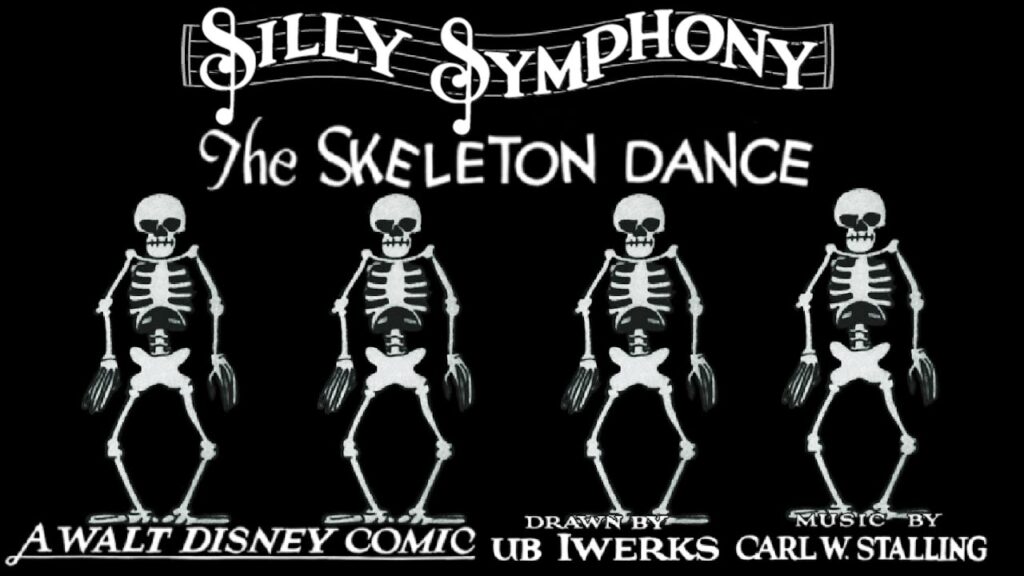
If you’ve spent any time scrolling through TikTok, Instagram Reels, or Pinterest during the autumn months, you’ve undoubtedly run into a very specific, deeply nostalgic aesthetic: four black-and-white, rubber-hose skeletons performing a synchronized, bone-clattering dance in a gothic churchyard.

This iconic sequence comes from Walt Disney and Ub Iwerks’ legendary 1929 short, The Skeleton Dance, the first-ever entry in the Silly Symphony series. For decades, it has stood as a visual masterclass in spooky, whimsical animation.

And as of January 1, 2025, the gates of the graveyard officially unlocked. The original 1929 cartoon entered the US Public Domain.

For gothic apparel brands, indie animators, and digital collage artists, this is an absolute goldmine of vintage spooky assets. However, because this is an early Disney property, navigating its commercial usage requires absolute precision. To protect your brand from corporate legal strikes, you must understand the strict “Silly Symphony Traps” and design with these dancing bones safely.

What Actually Entered the Public Domain?

Under the US 95-year corporate copyright clock, works published in 1929 officially crossed into the public domain on January 1, 2025. For The Skeleton Dance, this means you have full legal permission to copy, reprint, distribute, and remix:

  • The exact visual character designs of the four dancing skeletons.
  • The original film frames, backgrounds, and hand-drawn cell animations from the 1929 short.
  • The overall narrative concept of skeleton physics (detaching limbs, playing xylophone on ribs, and morphing into a giant skeleton).

The Two Great “Silly Symphony” Traps

While the cartoon itself is free, Disney still guards its modern brand assets fiercely. To keep your shop clean, you must dodge these two massive traps:

1. The Modern Disney Branding Trap (Trademarks)

Even when a cartoon’s copyright expires, the trademark of the company that produced it remains protected indefinitely.

  • The Trap: You cannot market your designs, merchandise, or animations using Disney’s active trademarks, logos, or their signature corporate typography.
  • The Rule: Avoid using the words “Disney,” “Silly Symphony,” or “Walt Disney Pictures” on your product listings, apparel tags, or marketing copy. Keep your branding entirely independent (e.g., “Vintage 1929 Rubber-Hose Spooky Tee” or “Retro Gothic Dance Prints”).

2. The Audio Recording Divide

The synchronized soundtrack for the short—composed by the legendary Carl Stalling—famously utilizes Edvard Grieg’s classic composition “March of the Dwarfs.”

  • The Trap: While both Grieg’s composition and the 1929 film’s master audio recording are technically public domain in the United States, international copyright laws regarding sound recordings can vary wildly from country to country.
  • The Rule: If you are distributing a video, game, or song globally (such as on YouTube, Spotify, or Steam), the safest route is to record your own sound effects (clattering wood blocks, xylophones, and woodwinds) matching the public domain Grieg sheet music, rather than ripping the raw 1929 audio track directly.

Creator Blueprint: What You Can and Can’t Do

To protect your business from automated takedown notices, use this strict boundary checklist when drafting your next spooky design project:

What You Can Do:

  • Print film frames on apparel: You can legally print high-contrast screenshots of the skeletons directly onto hoodies, sweatpants, t-shirts, and tote bags.
  • Loop and remix animations: You can clip, loop, and edit the original public domain animation frames to create retro lofi lyric videos, alternative music visualizers, or background assets for website designs.
  • Incorporate skeletons in indie games: You can trace, vectorize, and rebuild these specific rubber-hose skeletons to act as enemies, NPCs, or playable characters in a retro-style video game.
  • Use the original Grieg melody: You can record your own instrumental tracks, beats, or synth arrangements using the chord progressions and melodies from “March of the Dwarfs.”

What You Cannot Do:

  • Use Disney brand identifier fonts: Keep your titles and product typography completely clear of modern Disney-styled fonts or stylized logos.
  • Reference post-1929 Silly Symphony designs: Ensure your source material is strictly pulled from the 1929 short. Do not use characters, colors, or visual styles introduced in Disney’s later Silly Symphony animations from the 1930s or 1940s.
  • Ship internationally without audio clearance: If using the raw 1929 audio track, restrict your distribution to US-only territories to avoid international sound recording copyright conflicts.

Disclaimer: This article documents US copyright law transitions for works published in 1929. International public domain laws vary. This guide is for educational purposes and does not substitute for formal legal counsel.

Are you ready to dance?

The clatter of bones is officially free for creative remixes. Are you planning to drop a grungy streetwear line for the autumn season, or are you creating a spooky indie game?

Filed Under: Cartoons

The Pluto Loophole: How to Legally Use Disney’s Famous Hound (Before He Was Pluto)

June 24, 2026 by publicdomainwatch

When Mickey Mouse’s 1928 debut in Steamboat Willie entered the public domain, it triggered a global wave of creative remixes, horror games, and retro merchandise. Creators suddenly realized they could legally play in Walt Disney’s sandbox.

But what about Mickey’s legendary, floppy-eared canine companion?

If you are a graphic designer, animator, or merchandise seller, the answer is a thrilling legal puzzle. As of January 1, 2026, the earliest animated shorts featuring Disney’s most famous hound have officially entered the US Public Domain.

However, if you want to use his likeness in your next commercial project without getting a friendly visit from Disney’s legendary legal team, you must understand a bizarre historical loophole. You can legally use the dog—but you absolutely cannot call him “Pluto.”

Here is how to navigate the ultimate corporate copyright line and design with this classic cartoon canine safely.

The Bizarre 1930 Origins: From Feral Hunter to “Rover”

Unlike Mickey, who debuted with a clear identity, Disney’s famous yellow hound underwent a weird visual and narrative identity crisis during his first year in animation.

In 1930, Walt Disney released two cartoons that are now 100% in the public domain:

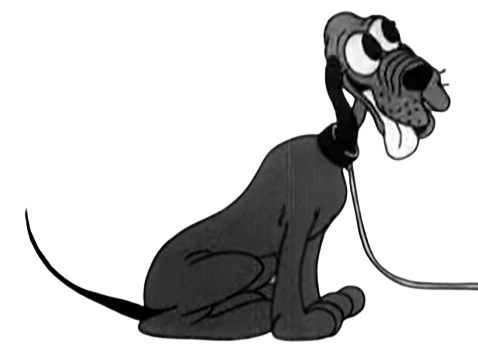
  1. The Chain Gang (September 1930): This cartoon marks the character’s absolute debut. However, he wasn’t Mickey’s lovable sidekick. Instead, he appeared as two unnamed, feral bloodhounds hired by a prison warden to track down an escaped Mickey Mouse.
  2. The Picnic (October 1930): He appeared again a month later, but this time he was redesigned as Minnie Mouse’s pet dog, and his name was explicitly “Rover.”

It wasn’t until 1931’s The Moose Hunt (which remains strictly protected by copyright until 2027) that the character was officially named “Pluto the Pup” and became Mickey’s permanent companion.

Because copyright expiration goes strictly by publication date, only the 1930 “Rover” and unnamed bloodhound designs are in the public domain today.

The Ultimate Trap: Copyright vs. Trademark

How can a character’s design be free to use while his name is locked down? It comes down to the fundamental difference between copyright and trademark.

  • Copyright protects the creative work itself (the 1930 cartoon drawings, animations, and frames). Copyrights have a hard expiration date of 95 years for corporate works of this era.
  • Trademark protects brand identifiers (names, logos, and characters used to sell merchandise) to prevent consumer confusion. Trademarks never expire as long as a company continues to use them and defend them in court.

Because Disney actively uses the name “Pluto” on toys, clothing, theme parks, and entertainment, the trademark on the name “Pluto” remains fiercely protected.

If you sell a t-shirt featuring the 1930 dog design and label it a “Pluto Shirt,” Disney can sue you for trademark infringement. But if you sell the exact same shirt and call it a “1930 Vintage Rover Tee,” you are legally in the clear.

Creator Blueprint: What You Can and Can’t Do

To protect your business, use this strict boundary guide when designing your next project:

What You Can Do:

  • Use the 1930 design elements: You can copy, trace, vectorize, and colorize the specific physical designs of the bloodhounds from The Chain Gang and Rover from The Picnic.
  • Sell custom merchandise: You can print these 1930 character designs onto apparel, skate decks, posters, and stickers, provided your marketing and product titles do not use the trademarked name “Pluto.”
  • Write original stories or animations: You can create new cartoons, comics, or video games starring “Rover the Dog,” utilizing his original 1930 rubber-hose style animations.
  • Animate his raw physical traits: You can replicate his early, exaggerated, loose-jointed physical comedy, such as his classic 1930 body-stretching gag.

What You Cannot Do:

  • Use the name “Pluto”: You cannot market, title, or reference your character as “Pluto,” “Pluto the Pup,” or “Mickey’s Dog.”
  • Copy his signature green collar: In the 1930 shorts, Rover did not wear a collar. His iconic green collar was introduced in later, still-copyrighted cartoons. Keep your public domain designs collar-free.
  • Replicate post-1930 personality traits: You cannot use specific expressions, modern color schemes, or narrative elements introduced in 1931 and beyond. Keep your creative source material strictly anchored to The Chain Gang and The Picnic.

Filed Under: Cartoons

The Canine Flapper: Why the 2026 Public Domain Betty Boop Has Dog Ears

June 23, 2026 by publicdomainwatch

When you think of global fashion icons, vintage animations, and classic jazz-age swagger, one silhouette immediately springs to mind: Betty Boop. With her perfectly coiffed curls, short dress, and signature “boop-boop-a-doop” catchphrase, she has spent nearly a century as a powerhouse of pop culture.

But as of January 1, 2026, the history of animation officially cracked wide open. The very first cartoon featuring Betty Boop entered the US Public Domain.

If you are a streetwear designer, independent animator, illustrator, or print-on-demand seller, this is a massive goldmine. The rubber-hose design style of the 1930s is experiencing a massive revival in modern apparel and tattoo culture. However, if you want to use her likeness legally without getting a cease-and-desist letter from Fleischer Studios, there is a bizarre historical twist you need to know.

The Plot Twist: Betty Boop Used to Be a Dog

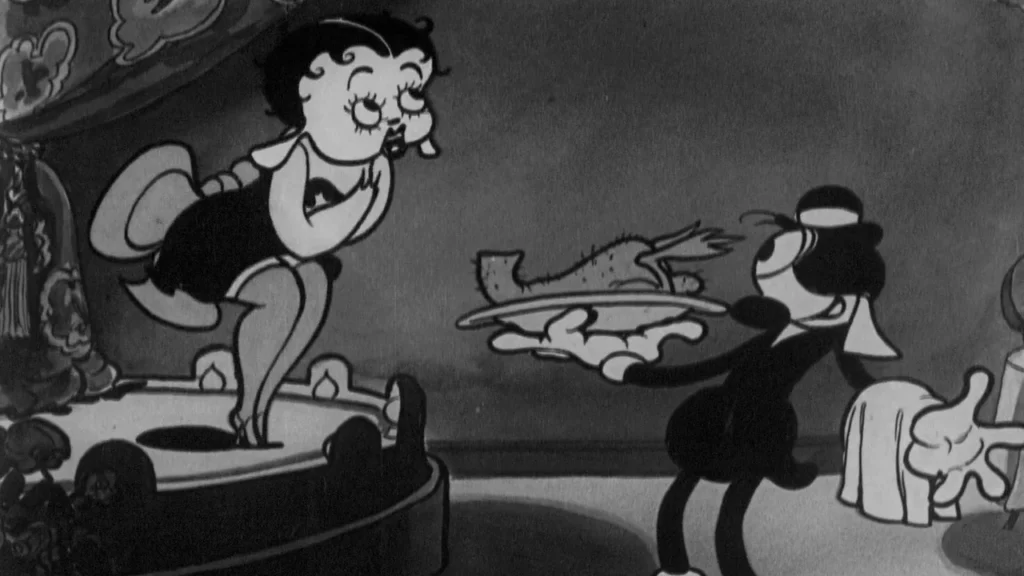
When animator Grim Natwick first drew the character for the Fleischer Studios cartoon Dizzy Dishes (released on August 9, 1930), she was not human.

To match her onscreen boyfriend, Bimbo the Dog, Betty was originally designed as an anthropomorphic French poodle. In her 1930 debut, she sported long, floppy hound ears, a black button nose, and jowls.

As the cartoons grew in popularity, the animators gradually phased out her canine traits. Her floppy poodle ears were redesigned into her iconic gold hoop earrings in 1931, and her nose became a cute button snout.

Because copyright expiration goes strictly by publication date, only the 1930 version of this character is in the public domain right now. That means the Betty Boop you can legally use today is the classic, surreal, rubber-hose poodle version.

The Legal Blueprint: “Can” vs. “Can’t” for Creators

Navigating Betty Boop in 2026 requires understanding the difference between copyright (which protects the creative work itself) and trademark (which protects brand identity).

The Golden Rule: The visual art, audio, and frames from the 1930 cartoon Dizzy Dishes are free to use, remix, and sell. However, the name “Betty Boop” remains a highly protected trademark owned by Fleischer Studios.

You CAN:

  • Remix the 1930 Animation Art: You can take screenshots, vector line drawings, and character frames from Dizzy Dishes and print them directly onto t-shirts, hoodies, posters, and tote bags.
  • Use the ‘Rubber-Hose’ Aesthetic: You can copy her exact 1930 body proportions, her dancing loops, and her surreal animations to create your own new cartoons or digital stickers.
  • Sample the Audio: The music and voice tracks from the 1930 short are out of copyright. You can sample her original “boop-boop-a-doop” audio vocals for lofi tracks, electronic music, or video games.

You CANNOT:

  • Use the Name “Betty Boop” as a Brand: Because of active trademarks, you cannot name your clothing line “The Betty Boop Collection” or list your product on Etsy as an official “Betty Boop T-Shirt.” Instead, market your items using descriptive, historical keywords like “Vintage 1930s Cartoon Character Shirt” or “Retro Rubber-Hose Style Apparel.”
  • Use Her Later Look: You cannot give her the humanized appearance, red dress, or specific design modifications that were introduced in 1931 and beyond. Keep your designs strictly anchored to the black-and-white, poodle-eared look from 1930.

Join the Remix Culture

The jazz age of animation is officially open for business. Are you planning to integrate these historic animations into an upcoming apparel line, or are you just a fan of weird animation trivia?

Filed Under: Cartoons

Primary Sidebar

Categories

  • Art
  • Books
  • Cartoons
  • Comics
  • Film
  • Folktales
  • Music

Copyright © 2026 · Genesis Sample on Genesis Framework · WordPress · Log in