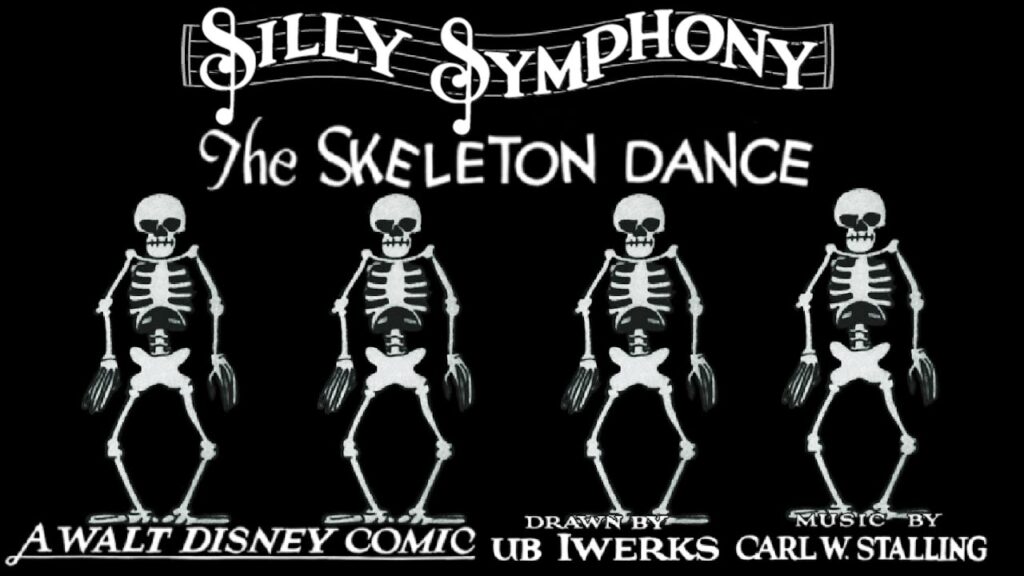
If you’ve spent any time scrolling through TikTok, Instagram Reels, or Pinterest during the autumn months, you’ve undoubtedly run into a very specific, deeply nostalgic aesthetic: four black-and-white, rubber-hose skeletons performing a synchronized, bone-clattering dance in a gothic churchyard.
This iconic sequence comes from Walt Disney and Ub Iwerks’ legendary 1929 short, The Skeleton Dance, the first-ever entry in the Silly Symphony series. For decades, it has stood as a visual masterclass in spooky, whimsical animation.
And as of January 1, 2025, the gates of the graveyard officially unlocked. The original 1929 cartoon entered the US Public Domain.
For gothic apparel brands, indie animators, and digital collage artists, this is an absolute goldmine of vintage spooky assets. However, because this is an early Disney property, navigating its commercial usage requires absolute precision. To protect your brand from corporate legal strikes, you must understand the strict “Silly Symphony Traps” and design with these dancing bones safely.
What Actually Entered the Public Domain?
Under the US 95-year corporate copyright clock, works published in 1929 officially crossed into the public domain on January 1, 2025. For The Skeleton Dance, this means you have full legal permission to copy, reprint, distribute, and remix:
- The exact visual character designs of the four dancing skeletons.
- The original film frames, backgrounds, and hand-drawn cell animations from the 1929 short.
- The overall narrative concept of skeleton physics (detaching limbs, playing xylophone on ribs, and morphing into a giant skeleton).
The Two Great “Silly Symphony” Traps
While the cartoon itself is free, Disney still guards its modern brand assets fiercely. To keep your shop clean, you must dodge these two massive traps:
1. The Modern Disney Branding Trap (Trademarks)
Even when a cartoon’s copyright expires, the trademark of the company that produced it remains protected indefinitely.
- The Trap: You cannot market your designs, merchandise, or animations using Disney’s active trademarks, logos, or their signature corporate typography.
- The Rule: Avoid using the words “Disney,” “Silly Symphony,” or “Walt Disney Pictures” on your product listings, apparel tags, or marketing copy. Keep your branding entirely independent (e.g., “Vintage 1929 Rubber-Hose Spooky Tee” or “Retro Gothic Dance Prints”).
2. The Audio Recording Divide
The synchronized soundtrack for the short—composed by the legendary Carl Stalling—famously utilizes Edvard Grieg’s classic composition “March of the Dwarfs.”
- The Trap: While both Grieg’s composition and the 1929 film’s master audio recording are technically public domain in the United States, international copyright laws regarding sound recordings can vary wildly from country to country.
- The Rule: If you are distributing a video, game, or song globally (such as on YouTube, Spotify, or Steam), the safest route is to record your own sound effects (clattering wood blocks, xylophones, and woodwinds) matching the public domain Grieg sheet music, rather than ripping the raw 1929 audio track directly.
Creator Blueprint: What You Can and Can’t Do
To protect your business from automated takedown notices, use this strict boundary checklist when drafting your next spooky design project:
What You Can Do:
- Print film frames on apparel: You can legally print high-contrast screenshots of the skeletons directly onto hoodies, sweatpants, t-shirts, and tote bags.
- Loop and remix animations: You can clip, loop, and edit the original public domain animation frames to create retro lofi lyric videos, alternative music visualizers, or background assets for website designs.
- Incorporate skeletons in indie games: You can trace, vectorize, and rebuild these specific rubber-hose skeletons to act as enemies, NPCs, or playable characters in a retro-style video game.
- Use the original Grieg melody: You can record your own instrumental tracks, beats, or synth arrangements using the chord progressions and melodies from “March of the Dwarfs.”
What You Cannot Do:
- Use Disney brand identifier fonts: Keep your titles and product typography completely clear of modern Disney-styled fonts or stylized logos.
- Reference post-1929 Silly Symphony designs: Ensure your source material is strictly pulled from the 1929 short. Do not use characters, colors, or visual styles introduced in Disney’s later Silly Symphony animations from the 1930s or 1940s.
- Ship internationally without audio clearance: If using the raw 1929 audio track, restrict your distribution to US-only territories to avoid international sound recording copyright conflicts.
Disclaimer: This article documents US copyright law transitions for works published in 1929. International public domain laws vary. This guide is for educational purposes and does not substitute for formal legal counsel.
Are you ready to dance?
The clatter of bones is officially free for creative remixes. Are you planning to drop a grungy streetwear line for the autumn season, or are you creating a spooky indie game?