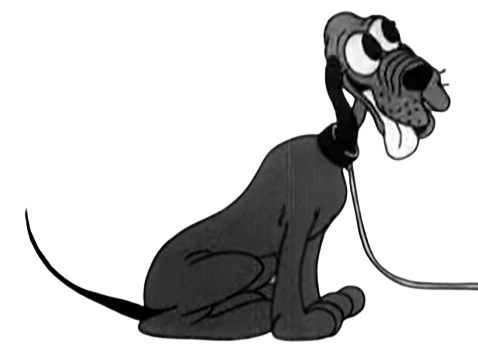
When Mickey Mouse’s 1928 debut in Steamboat Willie entered the public domain, it triggered a global wave of creative remixes, horror games, and retro merchandise. Creators suddenly realized they could legally play in Walt Disney’s sandbox.
But what about Mickey’s legendary, floppy-eared canine companion?
If you are a graphic designer, animator, or merchandise seller, the answer is a thrilling legal puzzle. As of January 1, 2026, the earliest animated shorts featuring Disney’s most famous hound have officially entered the US Public Domain.
However, if you want to use his likeness in your next commercial project without getting a friendly visit from Disney’s legendary legal team, you must understand a bizarre historical loophole. You can legally use the dog—but you absolutely cannot call him “Pluto.”
Here is how to navigate the ultimate corporate copyright line and design with this classic cartoon canine safely.
The Bizarre 1930 Origins: From Feral Hunter to “Rover”
Unlike Mickey, who debuted with a clear identity, Disney’s famous yellow hound underwent a weird visual and narrative identity crisis during his first year in animation.
In 1930, Walt Disney released two cartoons that are now 100% in the public domain:
- The Chain Gang (September 1930): This cartoon marks the character’s absolute debut. However, he wasn’t Mickey’s lovable sidekick. Instead, he appeared as two unnamed, feral bloodhounds hired by a prison warden to track down an escaped Mickey Mouse.
- The Picnic (October 1930): He appeared again a month later, but this time he was redesigned as Minnie Mouse’s pet dog, and his name was explicitly “Rover.”
It wasn’t until 1931’s The Moose Hunt (which remains strictly protected by copyright until 2027) that the character was officially named “Pluto the Pup” and became Mickey’s permanent companion.
Because copyright expiration goes strictly by publication date, only the 1930 “Rover” and unnamed bloodhound designs are in the public domain today.
The Ultimate Trap: Copyright vs. Trademark
How can a character’s design be free to use while his name is locked down? It comes down to the fundamental difference between copyright and trademark.
- Copyright protects the creative work itself (the 1930 cartoon drawings, animations, and frames). Copyrights have a hard expiration date of 95 years for corporate works of this era.
- Trademark protects brand identifiers (names, logos, and characters used to sell merchandise) to prevent consumer confusion. Trademarks never expire as long as a company continues to use them and defend them in court.
Because Disney actively uses the name “Pluto” on toys, clothing, theme parks, and entertainment, the trademark on the name “Pluto” remains fiercely protected.
If you sell a t-shirt featuring the 1930 dog design and label it a “Pluto Shirt,” Disney can sue you for trademark infringement. But if you sell the exact same shirt and call it a “1930 Vintage Rover Tee,” you are legally in the clear.
Creator Blueprint: What You Can and Can’t Do
To protect your business, use this strict boundary guide when designing your next project:
What You Can Do:
- Use the 1930 design elements: You can copy, trace, vectorize, and colorize the specific physical designs of the bloodhounds from The Chain Gang and Rover from The Picnic.
- Sell custom merchandise: You can print these 1930 character designs onto apparel, skate decks, posters, and stickers, provided your marketing and product titles do not use the trademarked name “Pluto.”
- Write original stories or animations: You can create new cartoons, comics, or video games starring “Rover the Dog,” utilizing his original 1930 rubber-hose style animations.
- Animate his raw physical traits: You can replicate his early, exaggerated, loose-jointed physical comedy, such as his classic 1930 body-stretching gag.
What You Cannot Do:
- Use the name “Pluto”: You cannot market, title, or reference your character as “Pluto,” “Pluto the Pup,” or “Mickey’s Dog.”
- Copy his signature green collar: In the 1930 shorts, Rover did not wear a collar. His iconic green collar was introduced in later, still-copyrighted cartoons. Keep your public domain designs collar-free.
- Replicate post-1930 personality traits: You cannot use specific expressions, modern color schemes, or narrative elements introduced in 1931 and beyond. Keep your creative source material strictly anchored to The Chain Gang and The Picnic.