For a creature self-described as a “Bear of Very Little Brain,” Winnie-the-Pooh possesses an astonishing amount of cultural power. What began as a father’s whimsical bedtime stories for his son has transformed into a multi-billion-dollar global franchise, a landmark case study in intellectual property law, and a symbol of creative liberation in the public domain era.
Pooh’s journey from a quiet forest in England to the center of a modern copyright revolution reveals how much a simple teddy bear can teach us about the business of art.
1. The Real-Life Origins of the Hundred Acre Wood
The magic of Winnie-the-Pooh lies in how deeply it was rooted in the real world of British author A.A. Milne and his son, Christopher Robin Milne.
Christopher Robin’s favorite stuffed bear, originally named Edward, was renamed “Winnie” after a real-life Canadian black bear named Winnipeg, whom the family frequently visited at the London Zoo. The “Pooh” part of the name came from a swan the family met on vacation.
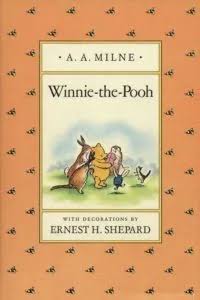
When Milne published the original book Winnie-the-Pooh in 1926, he paired his gentle, philosophical prose with the delicate line-art illustrations of E.H. Shepard. Shepard famously based the visual design of Pooh not on Christopher Robin’s actual toy, but on “Growler,” a plush bear belonging to his own son. Together, Milne and Shepard created a timeless, comforting sanctuary of childhood innocence.
2. The Disney Empire and the “Red Shirt” Transformation
In the 1930s, an American producer named Stephen Slesinger purchased the US and Canadian merchandising rights to the characters. It was during this era that Pooh was first drawn wearing a red shirt for an audio-record cover.
In 1961, The Walt Disney Company acquired those rights, dropped the hyphens from “Winnie-the-Pooh,” and unleashed a multi-billion-dollar licensing juggernaut.
Disney fundamentally altered Pooh’s visual and cultural identity:
- They traded E.H. Shepard’s sketchy, muted line art for a vibrant, smooth animation style.
- They gave Pooh bright yellow fur and solidified the iconic red crop-top shirt as his definitive look.
- They introduced new, animated characters like Gopher and brought the characters to life with unforgettable, soft American vocal performances.
For generations of children, the bright, red-shirted Disney cartoon completely replaced the original literary bear in the global consciousness.
3. The Public Domain Split: 1926 vs. Disney
The legal status of Winnie the Pooh drastically shifted on January 1, 2022, when A.A. Milne’s original 1926 book hit its 95-year copyright limit in the United States, officially entering the public domain.
This historic milestone split the character cleanly in two, creating a highly specific legal boundary that modern creators have to navigate meticulously.
| What is Public Domain (Free to Use) | What is Still Copyrighted (Owned by Disney) |
| • The original 1926 book text and stories. | • The bright red crop-top shirt design. |
| • E.H. Shepard’s original line-art illustrations. | • Disney’s specific animated character designs and voices. |
| • Original characters: Pooh, Piglet, Eeyore, Rabbit, Kanga, Roo, and Owl. | • Disney-exclusive characters like Gopher. |
| • Tigger (entered the public domain in 2024 via The House at Pooh Corner). | • Subsequent Disney movies, scripts, and songs (like the famous theme song). |
The Immediate Fallout: The minute the 1926 copyright expired, independent creators jumped. The most famous (and jarring) result was the indie horror film Winnie-the-Pooh: Blood and Honey. Because the filmmakers were strictly limited to the 1926 book, their killer version of Pooh wore a lumberjack flannel shirt instead of a red t-shirt, and Tigger had to be completely excluded from the first film because his character was still under copyright until 2024.
4. The Future of the Bear
As time moves forward, the corporate locks on the Hundred Acre Wood continue to rust away. Modern entertainment is entering an era where large-scale, high-quality independent projects—like Kartoon Studios’ upcoming 3D animated Hundred Acre Wood series—can openly compete with Disney’s version by drawing direct inspiration from Milne’s original text.
While Disney still holds active trademarks that prevent creators from using the “Winnie the Pooh” name to pass off bootleg merchandise as official corporate products, they no longer own the exclusive rights to the soul of the character.
Nearly a century after his birth, the silly old bear has broken out of the studio vaults. He belongs to the public square once again, proving that great stories can survive censorship, commercialization, and the passing of generations to find a brand-new life in the hands of everyday creators.