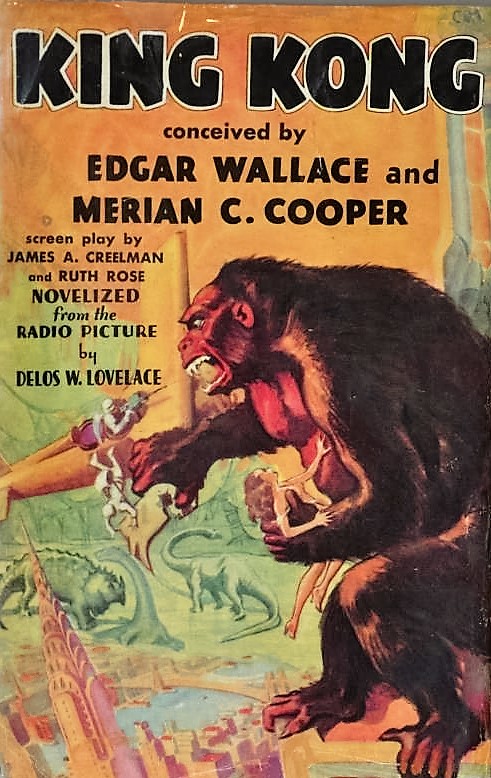
If you look at the landscape of indie gaming, retro poster design, and tabletop RPGs, you’ll notice an enduring obsession with massive, building-sized monsters, uncharted prehistoric islands, and classic pulp adventure. From kaiju battle simulators to dark exploration games, creators are always searching for the ultimate primal icon.
And at the absolute apex of this genre sits the most famous giant ape in human history: King Kong.
For decades, creators assumed this roaring masterpiece was locked away in a corporate vault, fiercely guarded by Hollywood studios. After all, the legendary 1933 movie starring Fay Wray doesn’t enter the US Public Domain until January 1, 2028.
But what if we told you that a bizarre, multi-million-dollar legal oversight from the 1970s unlocked the entire story of the giant ape, Skull Island, the prehistoric monsters, and the dramatic Empire State Building climax decades ago?
Welcome to the 1932 Novelization Loophole—the ultimate creative backdoor to building your next monster game, apparel drop, or graphic novel today. Here is your definitive guide to bypassing the Hollywood studios and sourcing the Eighth Wonder safely and legally.
The Great 1976 Legal War: How the Ape Broke Free
To use King Kong safely today, you have to understand one of the wildest legal battles in cinema history.
In the mid-1970s, Universal Pictures and Paramount Pictures got into a massive, litigious street-fight over who had the right to produce a modern remake of King Kong. To win the lawsuit, Universal’s legal team began digging into the original copyrights of the franchise.
They discovered a massive administrative blunder: Delos W. Lovelace’s 1932 novelization of King Kong (which was published by Grosset & Dunlap slightly before the movie hit theaters in 1933 to build hype) had never had its copyright renewed in 1960.
Under the US copyright laws of that era, works required a manual renewal after 28 years. Because the publishers forgot to file the paperwork, a landmark federal court ruled in 1976 that the entire text of the 1932 novel, along with its characters and plot, had officially entered the public domain.
This means that while the 1933 film is still locked up, the foundational story of the giant ape is 100% free for you to adapt, print, remix, and sell today.
The Three Great “Kong” Traps
While Lovelace’s 1932 text is open-source, the film rights and active trademarks are heavily defended by Universal Studios and the estate of creator Merian C. Cooper. To keep your brand entirely safe from automated takedown notices and corporate lawyers, you must dodge these three massive traps:
1. The “Visual Likeness” Lockout (The Film Puppet Trap)
When we think of King Kong, we instantly picture the exact stop-motion model designed by legendary animator Willis O’Brien for the 1933 film.
- The Trap: The specific, physical visual design of the 1933 stop-motion puppet—including its exact facial structure, the texture of its fur, and the specific cinematography of the film—remains copyrighted until 2028.
- The Rule: Do not make your giant ape look like a direct copy of the 1933 film puppet. Instead, design your own unique visual interpretation of the giant prehistoric ape based strictly on the text. Lovelace’s novel describes the beast as a towering, nightmares-inducing creature of massive proportions, giving you full creative liberty to draw a much more realistic, terrifying, or highly stylized modern beast.
2. The “King Kong” Trademark Shield
This is the single most dangerous trap for e-commerce, print-on-demand, and video game developers.
- The Trap: While the characters and story from the 1932 book are free of copyright, Universal Studios actively holds federal trademarks on the word mark “King Kong” for video games, apparel, toys, and general entertainment.
- The Rule: You cannot release a game titled “King Kong: Skull Island” or sell a hoodie labeled “King Kong Graphic Tee.” If you use his name as a brand identifier, your listings will be flagged and removed. Instead, market your project under descriptive, evocative, retro-pulp titles, such as:
- “The Eighth Wonder of the Jungle”
- “Beasts of Skull Mountain”
- “The 1932 Giant Ape Expedition”
- “Terror on the Prehistoric Island”
3. The Max Steiner Soundtrack Trap
If you are developing a digital video game, a cinematic trailer, or a lofi background track, you might want to use some of the original audio elements.
- The Trap: Composer Max Steiner’s legendary, sweeping orchestral score for the 1933 film is heavily copyrighted.
- The Rule: Keep your audio files and sound engines completely free of any movie soundtrack elements. Instead, lean into atmospheric, hand-recorded jungle ambient tracks, deep tribal drums, or public-domain 1930s adventure marches to set the mood.
Creator Blueprint: What You Can and Can’t Do Today
Use this simple, legally clean boundary checklist when planning your next product drop or game development sprint:
What You Can Do:
- Build complete adventure and survival games: You can design a video game where players explore Skull Mountain, fight dinosaurs, rescue a captured actress, and attempt to capture a giant prehistoric ape, following the exact plot of the 1932 novel.
- Write and publish original novels or comics: You can write prequels, sequels, or modern comic books starring the 1932 cast of characters, including filmmaker Carl Denham, the heroic Jack Driscoll, the beautiful Ann Darrow, and the giant ape.
- Sell custom pulp-style apparel: You can design stunning, screen-printed streetwear, canvas jackets, and posters featuring original illustrations of a giant ape climbing a 1930s skyscraper, capitalizing on classic pulp-novel layouts.
- Animate the prehistoric monsters: You can fully render and animate the iconic creatures of the island, including the giant ape, the Tyrannosaurus Rex, the pterodactyls, and the massive swamp serpents.
What You Cannot Do:
- Use Fay Wray’s exact likeness: Do not draw Ann Darrow to look exactly like actress Fay Wray. Keep your character illustrations stylized or original.
- Incorporate movie-exclusive music or poster art: Do not copy the iconic 1933 film poster (the stylized logo, the specific painted scene of Fay Wray in Kong’s hand) or Steiner’s score.
- Put the name “King Kong” on your product titles: Keep your store listings, game titles on Steam, and clothing tags completely clear of the active trademark. Use pulp-adventure keywords.
Disclaimer: This article documents US and international copyright and trademark transitions for Delos W. Lovelace’s 1932 novelization of King Kong. While the historical text and characters are in the public domain in the US, active trademarks regarding modern branding vary. This guide is for educational purposes and does not substitute for formal legal counsel.
Are you ready to explore the island?
The primal, raw world of the original 1932 giant ape is officially free for your creative remixes. Are you planning to drop a rugged streetwear collection featuring vintage expedition maps, or are you programming a tense, prehistoric survival game?