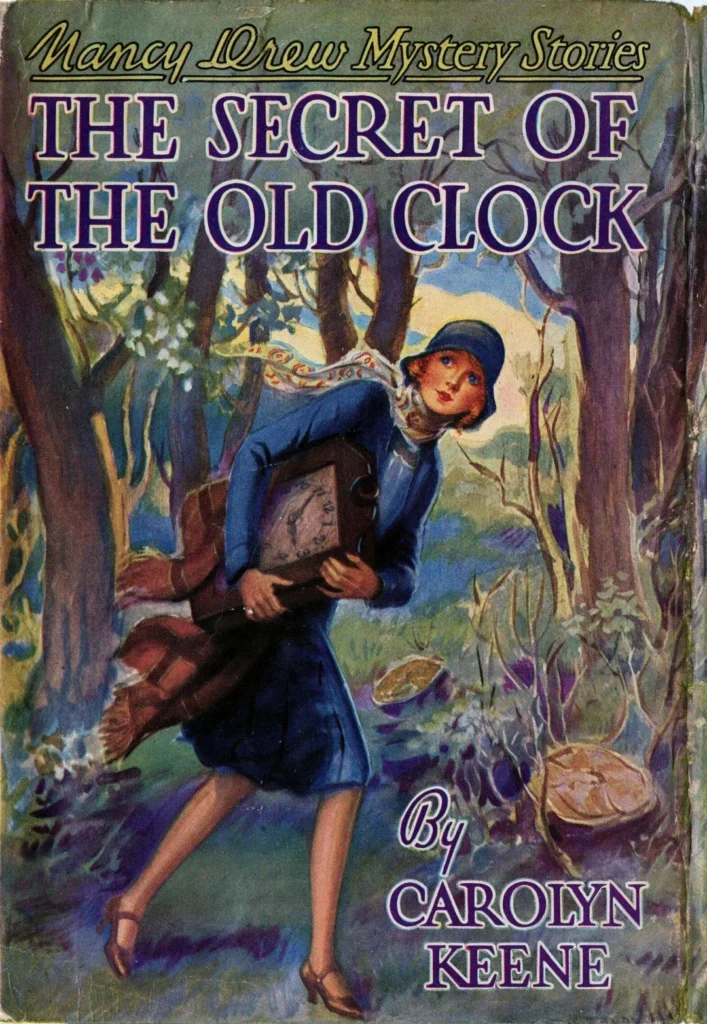
For nearly a century, the worlds of amateur sleuthing, vintage publishing, and teenage independence have been defined by one name: Nancy Drew.
Introduced to the world in the spring of 1930 by the Stratemeyer Syndicate, the brilliant, blue-roadster-driving teenage detective took the literary world by storm. For decades, her image, her stories, and her likeness were fiercely guarded by corporate publishers.
But as of January 1, 2026, the mystery has officially unraveled. The earliest iterations of Nancy Drew have officially entered the US Public Domain.
If you are a fiction writer, graphic designer, print-on-demand seller, or vintage enthusiast, this means the copyright gates are open. You can now legally remix, republish, and redesign using the original source material. However, intellectual property law is its own kind of maze. Here is exactly what you can use, what you must avoid, and how to start creating with Nancy today.
What Just Entered the Public Domain?
Copyright expiration goes strictly by publication date. Right now, the public domain applies exclusively to the Class of 1930. For Nancy Drew, this means the original first four books of the series are free to use:
- The Secret of the Old Clock
- The Hidden Staircase
- The Bungalow Mystery
- The Mystery at Lilac Inn
This includes the exact text of these specific books, the original character traits introduced within them, and the classic, striking cover illustrations painted by artist Russell H. Tandy.
The Legal Blueprint: “Can” vs. “Can’t”
Before you hit “publish” on a modern Nancy Drew spinoff, you have to understand the line between copyright expiration and active trademark protection.
The Golden Rule: You are free to use the 1930 version of the character and stories. You are not free to confuse consumers into thinking your product is an official release from the modern trademark holders (Simon & Schuster).
You CAN:
- Write and Sell Sequels: You can write a brand-new mystery novel starring the 1930 version of Nancy Drew, Carson Drew, and her friends introduced in the first four books.
- Republish the Originals: You can print your own physical editions of The Secret of the Old Clock, design a custom cover, add annotations, or release it as a free audiobook.
- Remix the Visuals: You can use Russell H. Tandy’s stunning 1930 cover illustrations on t-shirts, posters, tote bags, and website headers.
- Adapt to New Media: You can turn the first four books into an indie video game, a graphic novel, a screenplay, or a tabletop RPG.
You CANNOT:
- Use Post-1930 Elements: You cannot use characters, plot lines, or gadgets introduced in later books. For example, Nancy’s iconic boyfriend, Ned Nickerson, wasn’t introduced until book 5 (The Secret of Shadow Ranch), which was published later in 1930 and won’t enter the public domain until next year.
- Use the Modern “Nancy Drew” Logo: The specific, stylized font and silhouette logo used on modern book covers are protected by active trademarks. Your book or product cover must look entirely distinct and unique.
- Imply Official Endorsement: You cannot put “The Official New Adventure of Nancy Drew” on your cover. Instead, use a clear disclaimer on your copyright page, such as: “This work is an independent production based on the 1930 public domain character Nancy Drew and is not affiliated with or endorsed by Simon & Schuster.”
Disclaimer: This article provides historical context and educational analysis of public domain availability under United States copyright law. It does not constitute formal legal advice. For commercial ventures, always cross-reference your specific usage with current US Copyright Office records.
Your Turn to Investigate
The beauty of the public domain is that cultural history now belongs to the creators. Are you planning to pen a new mystery for our favorite teenage detective, or are you looking to spin her classic 1930s aesthetic into a new clothing line?