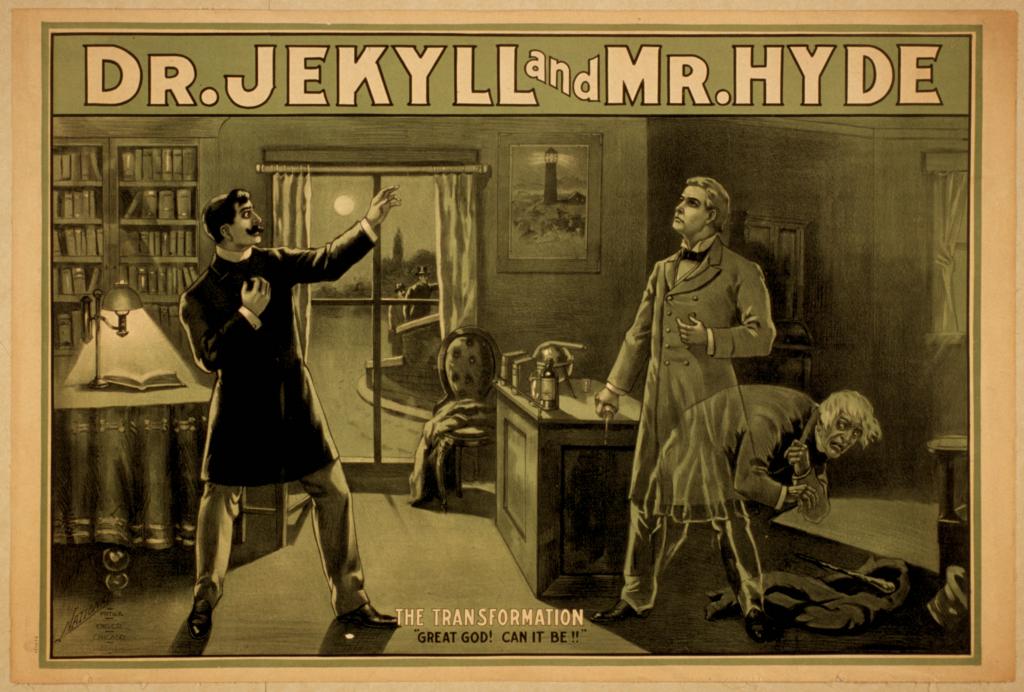
If you look at the landscape of modern dark-fantasy illustration, alternative comic books, and indie horror games, you will find a recurring obsession with the “split-personality” monster trope. From werewolf-style transformation mechanics to Jekyll-and-Hyde character arcs in gothic visual novels, creators are constantly drawn to the horror of the beast within.
And while Robert Louis Stevenson’s original 1886 novella Strange Case of Dr Jekyll and Mr Hyde has been in the public domain for generations, the single most visually iconic, terrifying, and influential adaptation of this story remains locked behind corporate walls.
We are talking about Rouben Mamoulian’s pre-Code masterpiece: the 1931 Paramount film Dr. Jekyll and Mr. Hyde, starring Fredric March in his legendary, Oscar-winning dual performance.
On January 1, 2027, this historic cinematic milestone officially enters the US Public Domain.
For vintage horror print merchants, indie game developers, and gothic apparel designers, this is an absolute goldmine. But because Jekyll and Hyde’s film history is wrapped in a bitter, multi-studio rights war (famously suppressed for decades by MGM), navigating this release is a delicate legal dance.
Here is your definitive guide to bypassing the corporate vaults, dodging the “Fredric March Trap,” and sourcing the original 1931 transformation safely.
The Great 1941 Suppression: How a Masterpiece Was Buried
To use the 1931 film safely in 2027, you must understand its turbulent history.
When MGM decided to produce their own high-budget remake of Dr. Jekyll and Mr. Hyde in 1941 starring Spencer Tracy, they didn’t want any competition. In a ruthless corporate maneuver, MGM bought the physical negatives and print rights of Rouben Mamoulian’s 1931 Paramount version and intentionally hid the film from public view for decades to force audiences to watch their new version instead.
It wasn’t until the late 20th century that the 1931 film was recovered and restored. Because of this suppression, the Spencer Tracy 1941 version remains heavily protected under copyright for years to come.
What Actually Unlocks on January 1, 2027?
By anchoring your designs strictly to the 1931 pre-Code film, you gain legal, royalty-free access to some of the most striking gothic horror assets ever captured on silver screen:
1. The Simian “Mr. Hyde” Visual Profile
In Stevenson’s original 1886 book, Hyde is described as a small, pale, dwarfish man with hairy hands who evokes a feeling of instinctive deformity.
- The 1931 Shift: Mamoulian and legendary makeup artist Wally Westmore revolutionized horror by turning Hyde into an athletic, hyper-aggressive, simian (ape-like) caveman with protruding fangs, a massive brow, and wild, unkempt hair. On January 1, 2027, this specific, primal, beast-like characterization becomes 100% public domain.
2. The Pre-Code “Ivy Pierson” (Miriam Hopkins) Character
In the original 1886 book, there are virtually no female characters.
- The 1931 Shift: The film introduced Ivy Pierson, a flirtatious, tragic music-hall singer who falls victim to Hyde’s psychological and physical tyranny. This character, along with her iconic, provocative pre-Code dialogue and costumes, belongs entirely to the 1931 public domain material.
3. Wally Westmore’s Color-Filter Transformation Technique
Mamoulian shot the famous single-take transformation of Jekyll turning into Hyde without any cuts. He achieved this by applying colored makeup (red and green) to Fredric March’s face and using matching colored lens filters that were progressively slid away, making the deep charcoal makeup lines instantly appear on black-and-white film.
- The visual progression of this transformation—the dark circles appearing around the eyes, the darkening of the cheekbones, and the blackening of the fingernails—is a stunning design sequence that creators can adapt for high-concept gothic layouts.
The Boris Karloff Trap Part 2: Actor Likeness Rights
While the makeup designs and film frames are public domain, you must watch out for the actor’s personal estate rights.
- The Trap: Fredric March (who played Jekyll/Hyde) passed away in 1975. Miriam Hopkins (who played Ivy) passed away in 1972. Under strict post-mortem Right of Publicity laws (which protect an actor’s personal celebrity likeness for 70 years after their death in states like California):
- Fredric March’s likeness is protected until 2045.
- Miriam Hopkins’ likeness is protected until 2042.
- The Rule: You can use the simian makeup, the wild hair, and the costume layouts. However, you cannot draw or render Mr. Hyde to look exactly like a photo-realistic portrait of Fredric March. Keep your character designs stylized, illustrative, or abstract to avoid a publicity-rights lawsuit from the March estate.
Creator Blueprint: What You Can and Can’t Do
To protect your creative business from automated takedown notices, use this strict boundary checklist when drafting your next project:
What You Can Do:
- Print 1931 cinematic frames: You can legally clean, screen-print, and sell iconic stills of the simian Mr. Hyde, the dark London streets, and Jekyll’s chemistry laboratory.
- Develop gothic horror indie games: You can program a survival or adventure game using the plot points, character names (including Ivy Pierson and Muriel Carew), and the dark Victorian London setting of the 1931 screenplay.
- Sample the original sound design: Dr. Jekyll and Mr. Hyde was famous for its revolutionary use of a synthetic, throbbing heartbeat sound effect during the transformation scenes. You can legally sample this historic audio stem for lo-fi beats or spooky soundscapes.
- Recreate Wally Westmore’s transformation art: You can utilize the visual stages of Jekyll’s color-filter transformation to create stunning multi-panel graphic prints for apparel and posters.
What You Cannot Do:
- Falsely advertise official museum licensing: While the art is free, you cannot claim your t-shirts or board games are “The Official Fredric March Estate Collection.” Keep your branding generic and historical.
- Copy the 1941 Spencer Tracy remake: Keep your character styles completely free of any visual markers, dialogue, or screenplay additions exclusive to the 1941 MGM film.
Over to You
The beast within is finally breaking free of its corporate chains. Are you planning to drop a grungy horror streetwear collection featuring the 1931 simian silhouette, or are you programming a tense, Victorian-era horror adventure?