• Skip to main content
  • Skip to primary sidebar

Public Domain Watch

Books

Sourcing the Castaway: How to Legally Use Daniel Defoe’s 1719 Robinson Crusoe Assets

June 26, 2026 by publicdomainwatch

If you look at the top-performing charts on Steam, you’ll find a massive, inescapable trend: survival games. From Rust and Valheim to Ark and Green Hell, players are obsessed with the raw loop of waking up on a deserted shoreline, scavenging for resources, building a fort, and domesticating the wild.

Similarly, in modern fashion, the “rustic adventurer” aesthetic—characterized by heavy cotton canvas, weathered brass, rope details, and distressed woodcut graphics—has become a staple for premium lifestyle brands.

What if you could build your next indie game, apparel line, or adventure novel using the ultimate, original blueprint of the entire survival genre?

Daniel Defoe’s legendary 1719 masterwork, Robinson Crusoe, is completely open-source.

Often regarded as the first English novel, Crusoe has been in the global public domain for centuries. Anyone can legally adapt his 28-year struggle on a Caribbean island. But if you blindly pack your ship and sail into this IP, you are cruising directly toward a jagged reef of modern copyright protections.

To protect your creative business, here is the ultimate guide to sourcing the 1719 classic safely, legally, and stylishly.

What Actually Belongs to the Public Domain?

Because the novel was published on April 25, 1719, all copyright protections expired long ago. Globally, you have absolute legal clearance to copy, adapt, translate, and sell:

  • The original text and characters: Robinson Crusoe, his loyal companion Friday, the mutineer Captain, and the island’s spaniels, goats, and parrots.
  • The entire narrative progression: The shipwreck, salvaging planks and gunpowder, carving a cave-fortress, domesticating wild goats, discovering the terrifying single footprint in the sand, and the battle against the mutineers.
  • Historical illustrated editions: The breathtaking 18th- and 19th-century woodblock prints and engravings from early printings of the book.

The Three Great “Castaway” Traps

While Defoe’s original book is completely free, modern film studios, publishers, and game developers have spent millions building copyrighted assets on top of the core story. To keep your brand completely out of legal crossfire, you must dodge these three traps:

1. The Hollywood Screenplay Trap

Since 1719, there have been dozens of movie, television, and cartoon adaptations—ranging from Pierce Brosnan’s gritty 1997 drama to various family-friendly comedies.

  • The Trap: Film screenplays introduce completely original characters, modernized subplots, unique visual designs, and orchestral musical scores that are heavily protected under active copyrights.
  • The Rule: Your source of truth must be Daniel Defoe’s 1719 text. Do not base your game characters, dialog, or apparel on modern movies. If Friday speaks using modern screenwritten tropes or possesses cinematic traits unique to a film adaptation, you are violating copyright.

2. The “Cast Away” (Tom Hanks) Confusion

This is the most common consumer mix-up, and it is a trademark minefield.

  • The Trap: The 2000 blockbusting film Cast Away, starring Tom Hanks, is owned strictly by 20th Century Studios and DreamWorks. Iconic elements—most notably “Wilson” the blood-faced volleyball—are heavily copyrighted and trademarked assets.
  • The Rule: Keep your designs completely free of white volleyballs with handprint faces. If you want to give your castaway a silent companion, stick to Defoe’s original text: Crusoe had a dog, two cats, and a parrot named Poll who could speak a few words.

3. Friday’s Representation & Modern Cultural Sensitivity

  • The Trap: In the original 1719 novel, the relationship between Crusoe and Friday is deeply rooted in 18th-century British colonialism (e.g., Friday immediately bows to Crusoe, calls him “Master,” and converts to Christianity). If you blindly replicate these outdated power dynamics in a modern game or brand, you risk massive social media backlash, even if it is legally public domain.
  • The Rule: Modernize Friday’s agency! Indie game developers and novelists have a beautiful opportunity to adapt the story as an equal, cooperative partnership of survival, or even retell the story entirely from Friday’s perspective. It’s not just a smarter design choice; it’s an incredibly compelling marketing hook.

Creator Blueprint: What You Can and Can’t Do

Use this quick legal boundary checklist when planning your next adventure launch:

What You Can Do:

  • Build complete survival games: You can design a game where players control Crusoe, utilizing the exact building plans, crafting steps, and farming challenges detailed in the 1719 book.
  • Clean and print historic woodcuts: You can locate early illustrated editions of the book, digitize the raw ink illustrations, clean the lines, and screen-print them onto heavy canvas bags, hoodies, and jackets.
  • Write sequels, prequels, or spin-offs: You can expand Defoe’s universe by writing a modern survival thriller, a sci-fi shipwreck adaptation on a barren planet, or a gothic horror graphic novel based on the island.
  • Brand products with the original title: You are completely free to title your video game or clothing brand “Robinson Crusoe” or “The Castaway of 1719,” as the historical title cannot be monopolized by trademark for general adventure products.

What You Cannot Do:

  • Incorporate “Wilson” style merchandise: Do not sell sports equipment or lifestyle gear with handprint faces or modern cinematic castaway references.
  • Replicate modern film-exclusive subplots: Avoid adding romantic interests or specific movie villains that did not exist in the 1719 text.
  • Copy modern game mechanics directly: While the idea of a survival game is free, do not copy proprietary code, UI assets, or sound effects from modern survival games like Rust or Stranded Deep. Rebuild your assets from scratch!

Disclaimer: This article documents US and international copyright law transitions for Daniel Defoe’s 1719 novel. While the book is universally in the public domain, trademark laws regarding branding and modern adaptations vary. This guide is for educational purposes and does not substitute for formal legal counsel.

Ready to build your fort?

The ultimate survival epic is completely free for your next creative remix. Are you planning to program an indie island-crafting game, or are you looking to drop a rugged streetwear collection?

Filed Under: Books

The Wizard of Oz Trap: Why Dorothy Can’t Wear Ruby Slippers in Your Designs

June 24, 2026 by publicdomainwatch

For graphic designers, tabletop RPG writers, indie game developers, and e-commerce sellers, finding a beloved story that has been in the public domain for generations is like uncovering buried treasure. And when it comes to whimsical fantasy, nostalgia, and sheer cultural recognition, few worlds compare to L. Frank Baum’s 1900 masterpiece, The Wonderful Wizard of Oz.

Because the original book has been in the public domain for decades, creators have used it to build moody dark-fantasy RPGs, beautiful custom book prints, and endless lines of cottagecore apparel and home decor.

But if you are planning to design your own journey down the Yellow Brick Road, you are stepping onto a multi-million-dollar copyright landmine.

While Baum’s 1900 world belongs to the public, Metro-Goldwyn-Mayer’s legendary 1939 musical movie does not. Warner Bros. actively and aggressively defends the copyrights and trademarks associated with the film. If you confuse the book with the movie, you will face swift legal consequences.

Here is exactly why Dorothy cannot wear red shoes in your commercial designs, and how to source the original 1900 Oz safely.

The Technicolor Trap: How Silver Became Ruby

When MGM filmed the movie in 1939, they utilized the newly invented 3-strip Technicolor process. To make the movie pop on screen, the studio changed several key visual elements that were never in Baum’s original book. Because the 1939 film is strictly copyrighted, copying these movie-specific changes constitutes copyright infringement.

1. The Ruby Slippers (No Red Shoes!)

This is the single most famous copyright trap in the entire Oz universe.

  • The Reality: In Baum’s 1900 book, Dorothy’s magic shoes are silver. To show off their expensive new Technicolor technology, MGM’s filmmakers changed them to glittering ruby red so they would stand out against the yellow bricks.
  • The Rule: If your Dorothy wears glittering red slippers, you are infringing on Warner Bros.’ copyright. Keep her slippers silver!

2. The Green-Skinned Wicked Witch

When we picture the Wicked Witch of the West, we instantly picture green skin, a pointed black hat, a cackling voice, and a broomstick.

  • The Reality: In the 1900 book, the Wicked Witch is never described as having green skin. She actually had only one eye (which was as powerful as a telescope), carried a yellow umbrella instead of a broomstick, and wore her hair in three pigtails. The iconic bright green skin was a Technicolor makeup choice by MGM.
  • The Rule: Your public domain witch must have a normal or completely non-green skin tone (like pale gray, blue, or realistic tones).

3. “Over the Rainbow” and Movie Songs

If you are designing a music box, printing lyrics on t-shirts, or building a video game soundtrack, you might want to reference the movie’s music.

  • The Reality: Songs like “Over the Rainbow,” “We’re Off to See the Wizard,” and “Ding-Dong! The Witch Is Dead” were written specifically for the 1939 musical and remain heavily protected by copyright.
  • The Rule: You must stick strictly to the poems and songs featured in the text of the original 1900 book.

Creator Blueprint: What You Can and Can’t Do

To protect your business from aggressive cease-and-desist letters, use this strict boundary guide when designing your next project:

What You Can Do:

  • Give Dorothy silver shoes: You can depict Dorothy wearing her original silver slippers. This is a massive badge of authenticity that vintage book lovers will immediately appreciate.
  • Use W.W. Denslow’s original illustrations: The iconic, whimsical, and slightly unsettling Art Nouveau illustrations from the original 1900 printing are completely public domain. You can legally trace, vector, and print his original sketches of the Scarecrow, Tin Woodman, and Cowardly Lion.
  • Republish or adapt the original text: You are legally free to print your own annotated editions of the 1900 book, record an audiobook, write direct sequels, or build a gothic horror game using Baum’s original narrative.
  • Depict the Golden Cap: In the book, the Wicked Witch controls the Winged Monkeys using a magic Golden Cap—an awesome visual item completely ignored by the MGM movie that you can freely design.

What You Cannot Do:

  • Use the movie’s character likenesses: Do not draw Dorothy to look like Judy Garland, the Tin Man with a clock-heart on his chest, or the Scarecrow with the movie’s specific makeup textures.
  • Quote movie-exclusive lines: Iconic dialogue like “Toto, I’ve a feeling we’re not in Kansas anymore” or “There’s no place like home” were written specifically for the 1939 screenplay. Stick to the book’s dialogue.
  • Use the trademarked “Wizard of Oz” logo: While the title of the book is public domain, Warner Bros. holds active trademarks on specific commercial logos for merchandise. Keep your branding independent and descriptive.

Are you heading down the Yellow Brick Road?

The real, original world of Oz is far more surreal, gothic, and magical than the Hollywood version. Are you planning to write a dark retelling of the Emerald City, or are you designing a line of vintage silver-slipper merchandise?

Filed Under: Books

Down the Safe Rabbit Hole: Sourcing Alice in Wonderland Assets Without Disney’s Lawyers Chasing You

June 23, 2026 by publicdomainwatch

If you want to create a psychological horror video game, a whimsical brand of organic tea, a dark academia clothing line, or a new fantasy novel, there is one intellectual property that towers above all others as the ultimate creative canvas: Alice in Wonderland.

Originally published by Lewis Carroll in 1865 under the title Alice’s Adventures in Wonderland, this literary masterpiece of nonsense has been in the public domain for generations. Its characters—from the manic Mad Hatter to the philosophical Cheshire Cat—belong entirely to the world.

Because of this, creators have radically remixed her story for over a century. We’ve seen psychedelic rock songs, gritty steampunk merchandise, and gothic video games like American McGee’s Alice.

But if you are planning to build your own Wonderland-themed commercial project, you are stepping onto a legal chessboard. While Lewis Carroll’s world is free, The Walt Disney Company’s highly specific 1951 animated film is not. Here is how to navigate the ultimate “Disney Trap” and design with Alice safely.

The Great Blue Dress Trap: The Myth vs. The Victorian Reality

When you ask anyone to describe Alice, they will tell you the exact same thing: a sweet-faced girl in a bright blue dress with a white pinafore apron, a black headband, and blonde hair.

Here is the twist: That design is owned by Disney.

If you sell merchandise, publish an illustrated book, or release a game featuring an Alice designed with that specific combination of a blue dress and white pinafore, Disney’s legal team has a very strong case against you for copyright infringement.

What the Original Alice Actually Looked Like

In the original 1865 novel, the legendary black-and-white illustrations were drawn by Sir John Tenniel. Because they were uncolored, the dress was open to interpretation.

When the first authorized colored versions of the book were released in the late 19th and early 20th centuries, Alice didn’t wear blue:

  • In The Nursery “Alice” (1889), which featured colored covers hand-checked by Lewis Carroll himself, Alice’s dress was bright yellow.
  • In other early colored editions, she was frequently depicted in red, pink, or olive green.

By choosing a yellow, red, or patterned Victorian dress for your Alice, you instantly bypass Disney’s copyright grip while proving your absolute authenticity to vintage book lovers.

Creator Blueprint: “Can” vs. “Can’t” for Wonderland Designs

What You Can Do:

  • Use the original text and plot points: You can reprint, record audiobooks of, or write direct sequels to Alice’s Adventures in Wonderland (1865) and Through the Looking-Glass (1871). The rabbit hole, the mad tea party, the flamingo croquet game, and the trial are all free game.
  • Use John Tenniel’s original illustrations: You can print Tenniel’s iconic engravings (like the Cheshire Cat sitting in the tree or the Mad Hatter in his 10/6 hat) directly onto merchandise, clothing, and posters.
  • Create dark or radical retellings: You are legally free to turn Alice into a grimdark horror protagonist, an astronaut, or a cyberpunk hacker, provided your designs are derived from the 1865 book and not later protected films.

What You Cannot Do:

  • Copy Disney’s iconic character designs: You cannot copy the pink-and-purple striped Cheshire Cat, the chubby twin designs of Tweedledum and Tweedledee from the 1951 film, or Johnny Depp’s specific makeup and orange-haired look from Tim Burton’s 2010 film.
  • Use copyrighted songs or voice clips: You cannot sample music from the 1951 film (like “In a World of My Own” or “The Unbirthday Song”), or use exact script lines written specifically for the movie adaptations.
  • Evoke Disney branding: You cannot label your product in a way that suggests it is an official Disney product. Your logos, fonts, and tags must look entirely independent.

Are you falling down the rabbit hole?

Wonderland represents a world of limitless imagination that the law has officially set free. Are you planning to design a cozy tea brand, or are you outlining a dark modern graphic novel adaptation?

Filed Under: Books

The 1930 Nancy Drew Public Domain Guide: Legal Guardrails

June 22, 2026 by publicdomainwatch

For nearly a century, the worlds of amateur sleuthing, vintage publishing, and teenage independence have been defined by one name: Nancy Drew.

Introduced to the world in the spring of 1930 by the Stratemeyer Syndicate, the brilliant, blue-roadster-driving teenage detective took the literary world by storm. For decades, her image, her stories, and her likeness were fiercely guarded by corporate publishers.

But as of January 1, 2026, the mystery has officially unraveled. The earliest iterations of Nancy Drew have officially entered the US Public Domain.

If you are a fiction writer, graphic designer, print-on-demand seller, or vintage enthusiast, this means the copyright gates are open. You can now legally remix, republish, and redesign using the original source material. However, intellectual property law is its own kind of maze. Here is exactly what you can use, what you must avoid, and how to start creating with Nancy today.

What Just Entered the Public Domain?

Copyright expiration goes strictly by publication date. Right now, the public domain applies exclusively to the Class of 1930. For Nancy Drew, this means the original first four books of the series are free to use:

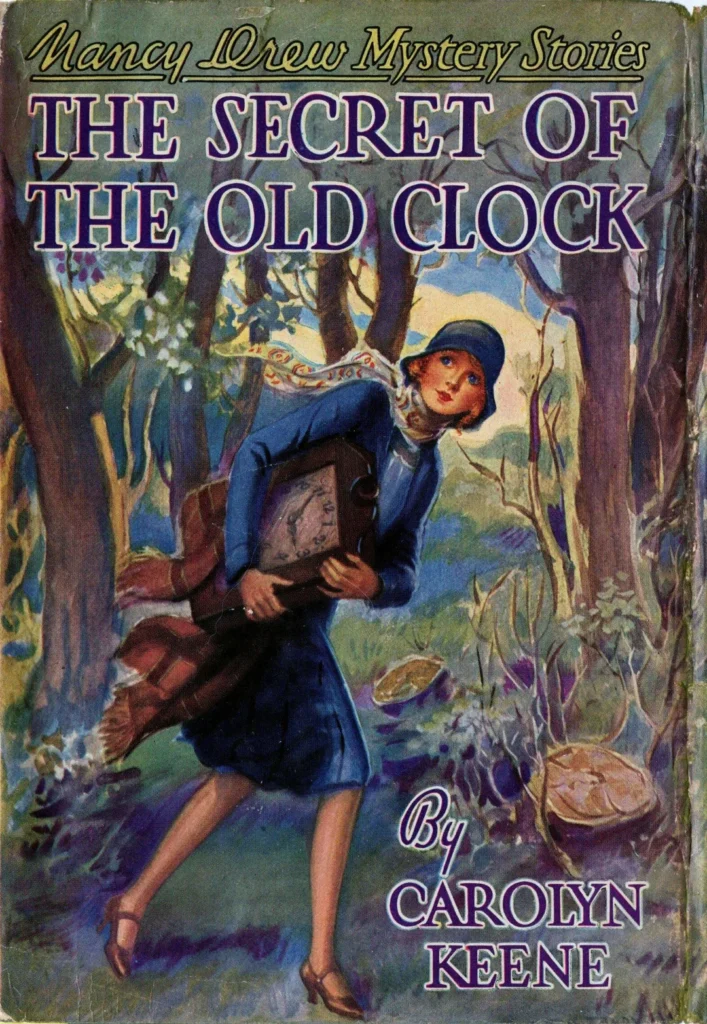
  1. The Secret of the Old Clock
  2. The Hidden Staircase
  3. The Bungalow Mystery
  4. The Mystery at Lilac Inn

This includes the exact text of these specific books, the original character traits introduced within them, and the classic, striking cover illustrations painted by artist Russell H. Tandy.

The Legal Blueprint: “Can” vs. “Can’t”

Before you hit “publish” on a modern Nancy Drew spinoff, you have to understand the line between copyright expiration and active trademark protection.

The Golden Rule: You are free to use the 1930 version of the character and stories. You are not free to confuse consumers into thinking your product is an official release from the modern trademark holders (Simon & Schuster).

You CAN:

  • Write and Sell Sequels: You can write a brand-new mystery novel starring the 1930 version of Nancy Drew, Carson Drew, and her friends introduced in the first four books.
  • Republish the Originals: You can print your own physical editions of The Secret of the Old Clock, design a custom cover, add annotations, or release it as a free audiobook.
  • Remix the Visuals: You can use Russell H. Tandy’s stunning 1930 cover illustrations on t-shirts, posters, tote bags, and website headers.
  • Adapt to New Media: You can turn the first four books into an indie video game, a graphic novel, a screenplay, or a tabletop RPG.

You CANNOT:

  • Use Post-1930 Elements: You cannot use characters, plot lines, or gadgets introduced in later books. For example, Nancy’s iconic boyfriend, Ned Nickerson, wasn’t introduced until book 5 (The Secret of Shadow Ranch), which was published later in 1930 and won’t enter the public domain until next year.
  • Use the Modern “Nancy Drew” Logo: The specific, stylized font and silhouette logo used on modern book covers are protected by active trademarks. Your book or product cover must look entirely distinct and unique.
  • Imply Official Endorsement: You cannot put “The Official New Adventure of Nancy Drew” on your cover. Instead, use a clear disclaimer on your copyright page, such as: “This work is an independent production based on the 1930 public domain character Nancy Drew and is not affiliated with or endorsed by Simon & Schuster.”

Disclaimer: This article provides historical context and educational analysis of public domain availability under United States copyright law. It does not constitute formal legal advice. For commercial ventures, always cross-reference your specific usage with current US Copyright Office records.

Your Turn to Investigate

The beauty of the public domain is that cultural history now belongs to the creators. Are you planning to pen a new mystery for our favorite teenage detective, or are you looking to spin her classic 1930s aesthetic into a new clothing line?

Filed Under: Books

  • « Go to Previous Page
  • Page 1
  • Page 2

Primary Sidebar

Categories

  • Art
  • Books
  • Cartoons
  • Comics
  • Film
  • Folktales
  • Music

Copyright © 2026 · Genesis Sample on Genesis Framework · WordPress · Log in