• Skip to main content
  • Skip to primary sidebar

Public Domain Watch

The Blue Genie Trap: How to Legally Source “Aladdin” (Without Disney’s Lawyers Chasing You)

June 26, 2026 by publicdomainwatch

If you spend any time looking at alternative streetwear drops, vector pop-art prints, or indie game concepts, you’ll notice a massive, enduring trend: a fascination with neon-drenched, retro-fantasy Middle Eastern aesthetics. Mystical lamps, swirling smoke, desert kingdoms, and powerful magical entities are highly valuable design assets.

And at the absolute center of this aesthetic sits one of the most famous tales in human history: Aladdin and the Magic Lamp.

As a traditional folktale, the story of Aladdin is completely open-source and has been in the public domain for centuries. However, trying to utilize this story for a streetwear line, an indie RPG, or a graphic novel is like walking through a cavern filled with hidden pressure plates.

Because The Walt Disney Company’s legendary 1992 animated film (and its 2019 live-action remake) has completely monopolized the visual grammar of the story, most creators accidentally step directly into a multi-million-dollar copyright trap.

To protect your creative business, here is the ultimate guide to bypassing the Disney monopoly, sourcing the authentic 18th-century classic safely, and capturing an incredibly stylish aesthetic.

The Galland Translation: Sourcing the True 1706 Origins

To use Aladdin safely, you must understand where the story actually comes from.

Surprisingly, Aladdin was not part of the original medieval Arabic manuscript of The One Thousand and One Nights (commonly known as The Arabian Nights). Instead, it was added to the collection in 1706 by French translator and scholar Antoine Galland. Galland heard the story from a Syrian storyteller named Hanna Diyab while translating the tales in Paris.

Because Galland’s 1706 French text is the absolute “source of truth” for the public domain version of the tale, anything written in his original translation is 100% free for you to copy, adapt, and sell.

But to stay legally clean, you must leave the modern Hollywood elements behind.

The Three Great “Aladdin” Traps

To keep your brand entirely safe from automated copyright strikes and legal cease-and-desist letters, you must dodge these three massive corporate traps:

1. The Blue Skin Lockout (Genie vs. Djinn)

When the average consumer hears the word “Genie,” they instantly picture a friendly, blue-skinned, muscular comedy-act character who cracks pop-culture jokes.

  • The Trap: Disney’s specific character design—the vibrant blue skin, the golden cuff-brackets on the wrists, the black goatee, and the floating smoky tail—is heavily protected under active copyright.
  • The Rule: Keep your genie far away from the color blue! In Galland’s 1706 text, the entities are referred to as djinns—formidable, elemental spirits of smoke and fire. They are described as giant, terrifying, and towering forces of nature. To be legally safe and visually striking, render your genie as a formless, menacing cloud of smoky obsidian, red embers, or deep green shadow.

2. The “Princess Jasmine” Trademark Shield

Dorothy had her ruby slippers, and Aladdin has his princess. But using her modern name is an instant ticket to legal trouble.

  • The Trap: The name “Princess Jasmine” is a registered trademark of Disney, and characters like Abu the kleptomaniac monkey, Rajah the tiger, and the sentient, tassel-waving Magic Carpet are 100% Disney-copyrighted inventions.
  • The Rule: In the original 1706 text, the princess is named Princess Badroulbadour (which translate beautifully as “Full Moon of Full Moons”). Aladdin has no animal sidekicks; instead, the original story features Aladdin’s mother as a key character, along with a wicked African Magician and two distinct djinns (one bound to a magic ring, and a much more powerful one bound to the lamp).

3. The Agrabah setting vs. The Chinese Reality

  • The Trap: Disney’s film takes place in the fictional, heavily stylized Middle Eastern desert city of Agrabah.
  • The Rule: Prepare to have your mind blown: In the original 1706 text, the story is explicitly set in “a city of China.” While the characters have Islamic names and the culture depicted is Islamic, the geographical setting is Chinese. Leaning into this hybrid, historic “Sino-Islamic” aesthetic—pairing Chinese architectural curves, silk robes, and paper lanterns with Islamic geometric tiles and calligraphy—is not only 100% legally safe, but it is also an incredibly fresh, highly premium visual hook that modern streetwear consumers will love.

Creator Blueprint: What You Can and Can’t Do

Use this quick legal boundary checklist when planning your next design or product launch:

What You Can Do:

  • Use the original 1706 names: You can freely write stories, build games, and design products utilizing the names Aladdin, Princess Badroulbadour, and the African Magician.
  • Animate the dual-djinn mechanic: You can design a video game or comic book featuring the two original djinns—the lesser Djinn of the Ring and the massive, world-bending Djinn of the Lamp.
  • Source historic Golden Age illustrations: You can scan, clean, and print the breathtaking, highly detailed Aladdin illustrations of artists like René Bull (1912) or Walter Crane (1875), which are fully public domain and look incredibly premium when screen-printed on heavy cotton canvas.
  • Design Sino-Islamic layouts: You can blend Chinese imperial motifs with Middle Eastern visual geometry, creating an authentic Silk Road aesthetic that stands out in a crowded market.

What You Cannot Do:

  • Make your genie a blue-skinned comedian: Do not make your genie blue, lighthearted, or visually styled after the animated character.
  • Incorporate movie-exclusive sidekicks: Keep your designs completely free of Abu the monkey, Rajah the tiger, Iago the parrot, or the sentient Magic Carpet.
  • Use movie-exclusive music or quotes: Do not use phrases like “A whole new world,” “Friend like me,” or “Phenomenal cosmic power, itty bitty living space,” as they are heavily protected movie screenwriting assets.

Disclaimer: This article documents US and international copyright and trademark transitions for Antoine Galland’s 1706 translation. While the historical text and original illustrations are universally in the public domain, active trademarks regarding modern characters and branding vary. This guide is for educational purposes and does not substitute for formal legal counsel.

Are you ready to rub the lamp?

The original, historical world of Aladdin is far more mysterious, dark, and culturally rich than any Hollywood studio has ever shown. Are you planning to drop a grungy streetwear line featuring the authentic Chinese setting, or are you creating an atmospheric indie game?

Filed Under: Folktales

Sourcing the Castaway: How to Legally Use Daniel Defoe’s 1719 Robinson Crusoe Assets

June 26, 2026 by publicdomainwatch

If you look at the top-performing charts on Steam, you’ll find a massive, inescapable trend: survival games. From Rust and Valheim to Ark and Green Hell, players are obsessed with the raw loop of waking up on a deserted shoreline, scavenging for resources, building a fort, and domesticating the wild.

Similarly, in modern fashion, the “rustic adventurer” aesthetic—characterized by heavy cotton canvas, weathered brass, rope details, and distressed woodcut graphics—has become a staple for premium lifestyle brands.

What if you could build your next indie game, apparel line, or adventure novel using the ultimate, original blueprint of the entire survival genre?

Daniel Defoe’s legendary 1719 masterwork, Robinson Crusoe, is completely open-source.

Often regarded as the first English novel, Crusoe has been in the global public domain for centuries. Anyone can legally adapt his 28-year struggle on a Caribbean island. But if you blindly pack your ship and sail into this IP, you are cruising directly toward a jagged reef of modern copyright protections.

To protect your creative business, here is the ultimate guide to sourcing the 1719 classic safely, legally, and stylishly.

What Actually Belongs to the Public Domain?

Because the novel was published on April 25, 1719, all copyright protections expired long ago. Globally, you have absolute legal clearance to copy, adapt, translate, and sell:

  • The original text and characters: Robinson Crusoe, his loyal companion Friday, the mutineer Captain, and the island’s spaniels, goats, and parrots.
  • The entire narrative progression: The shipwreck, salvaging planks and gunpowder, carving a cave-fortress, domesticating wild goats, discovering the terrifying single footprint in the sand, and the battle against the mutineers.
  • Historical illustrated editions: The breathtaking 18th- and 19th-century woodblock prints and engravings from early printings of the book.

The Three Great “Castaway” Traps

While Defoe’s original book is completely free, modern film studios, publishers, and game developers have spent millions building copyrighted assets on top of the core story. To keep your brand completely out of legal crossfire, you must dodge these three traps:

1. The Hollywood Screenplay Trap

Since 1719, there have been dozens of movie, television, and cartoon adaptations—ranging from Pierce Brosnan’s gritty 1997 drama to various family-friendly comedies.

  • The Trap: Film screenplays introduce completely original characters, modernized subplots, unique visual designs, and orchestral musical scores that are heavily protected under active copyrights.
  • The Rule: Your source of truth must be Daniel Defoe’s 1719 text. Do not base your game characters, dialog, or apparel on modern movies. If Friday speaks using modern screenwritten tropes or possesses cinematic traits unique to a film adaptation, you are violating copyright.

2. The “Cast Away” (Tom Hanks) Confusion

This is the most common consumer mix-up, and it is a trademark minefield.

  • The Trap: The 2000 blockbusting film Cast Away, starring Tom Hanks, is owned strictly by 20th Century Studios and DreamWorks. Iconic elements—most notably “Wilson” the blood-faced volleyball—are heavily copyrighted and trademarked assets.
  • The Rule: Keep your designs completely free of white volleyballs with handprint faces. If you want to give your castaway a silent companion, stick to Defoe’s original text: Crusoe had a dog, two cats, and a parrot named Poll who could speak a few words.

3. Friday’s Representation & Modern Cultural Sensitivity

  • The Trap: In the original 1719 novel, the relationship between Crusoe and Friday is deeply rooted in 18th-century British colonialism (e.g., Friday immediately bows to Crusoe, calls him “Master,” and converts to Christianity). If you blindly replicate these outdated power dynamics in a modern game or brand, you risk massive social media backlash, even if it is legally public domain.
  • The Rule: Modernize Friday’s agency! Indie game developers and novelists have a beautiful opportunity to adapt the story as an equal, cooperative partnership of survival, or even retell the story entirely from Friday’s perspective. It’s not just a smarter design choice; it’s an incredibly compelling marketing hook.

Creator Blueprint: What You Can and Can’t Do

Use this quick legal boundary checklist when planning your next adventure launch:

What You Can Do:

  • Build complete survival games: You can design a game where players control Crusoe, utilizing the exact building plans, crafting steps, and farming challenges detailed in the 1719 book.
  • Clean and print historic woodcuts: You can locate early illustrated editions of the book, digitize the raw ink illustrations, clean the lines, and screen-print them onto heavy canvas bags, hoodies, and jackets.
  • Write sequels, prequels, or spin-offs: You can expand Defoe’s universe by writing a modern survival thriller, a sci-fi shipwreck adaptation on a barren planet, or a gothic horror graphic novel based on the island.
  • Brand products with the original title: You are completely free to title your video game or clothing brand “Robinson Crusoe” or “The Castaway of 1719,” as the historical title cannot be monopolized by trademark for general adventure products.

What You Cannot Do:

  • Incorporate “Wilson” style merchandise: Do not sell sports equipment or lifestyle gear with handprint faces or modern cinematic castaway references.
  • Replicate modern film-exclusive subplots: Avoid adding romantic interests or specific movie villains that did not exist in the 1719 text.
  • Copy modern game mechanics directly: While the idea of a survival game is free, do not copy proprietary code, UI assets, or sound effects from modern survival games like Rust or Stranded Deep. Rebuild your assets from scratch!

Disclaimer: This article documents US and international copyright law transitions for Daniel Defoe’s 1719 novel. While the book is universally in the public domain, trademark laws regarding branding and modern adaptations vary. This guide is for educational purposes and does not substitute for formal legal counsel.

Ready to build your fort?

The ultimate survival epic is completely free for your next creative remix. Are you planning to program an indie island-crafting game, or are you looking to drop a rugged streetwear collection?

Filed Under: Books

Sourcing the Sailor: How to Legally Use 1929 Popeye Assets (Without Getting Sued)

June 26, 2026 by publicdomainwatch

If you have spent any time looking at modern streetwear design, alternative poster art, or classic American traditional tattoos, you already know how valuable the gritty, early 20th-century cartoon aesthetic is. The raw, ink-heavy, rubber-hose style of the late 1920s has a timeless visual attitude that commands premium prices in modern subcultures.

And as of January 1, 2025, the ultimate prize of that era officially unlocked.

E.C. Segar’s legendary, gravel-voiced mariner Popeye the Sailor Man officially entered the US Public Domain.

For apparel brands, indie comic artists, and print-on-demand sellers, this is an absolute goldmine. But because Popeye is still actively managed and defended by King Features Syndicate, navigating his commercial usage requires absolute legal precision. If you blindly throw a pipe-smoking sailor onto a hoodie, you are stepping directly into a massive corporate trap.

To protect your business from automated legal strikes, here is the creator’s guide to using the original 1929 Sailor Man safely and legally.

What Actually Entered the Public Domain?

Under the US 95-year corporate copyright clock, works published in 1929 officially crossed into the public domain. For Popeye, this means you have full legal permission to copy, reprint, distribute, and remix:

  • The original comic strip runs of E.C. Segar’s Thimble Theatre published between January 17, 1929 (Popeye’s debut) and December 31, 1929.
  • The exact original visual character design of Popeye: his squinty eye, missing teeth, oversized forearms (though without anchor tattoos in his earliest panels), and his classic sailor captain hat.
  • Popeye’s original supporting cast who debuted in 1929 or earlier, including Olive Oyl, her brother Castor Oyl, and her ex-boyfriend Ham Gravy.
  • The original narrative concepts, dialogues, and storylines featured in those 1929 comic strips.

The Three Great “Sailor Man” Traps

While the 1929 cartoon strip itself is free, King Features Syndicate guards its modern brand assets fiercely. To keep your shop completely clean, you must dodge these three massive traps:

1. The Whiffle Hen Trap (The Strength Divide)

When we think of Popeye, we instantly picture him squeezing a can of spinach to gain superhuman strength.

  • The Trap: In his 1929 debut, Popeye didn’t get his super-strength from eating spinach! Instead, he gained his invulnerability and power by rubbing the feathers of Bernice the Whiffle Hen—a rare, magical creature in Thimble Theatre. Spinach wasn’t introduced as his primary power source until 1932.
  • The Rule: If your public domain designs or stories reference Popeye gaining strength from spinach, you are technically infringing on a later, still-copyrighted element. To remain 100% legally watertight (and to make your brand look incredibly retro and smart), build your designs around Bernice the Whiffle Hen instead!

2. The “I’m Popeye the Sailor Man” Song Lockout

If you are designing a digital video, a video game, or an audio track, you might want to use his famous theme song.

  • The Trap: The iconic theme song (“I’m Popeye the Sailor Man / I’m strong to the finich / ’cause I eats me spinach…”) was written by Sammy Lerner for the 1933 Fleischer Studios animated cartoon. The musical composition and early recordings of that song remain strictly copyrighted.
  • The Rule: Keep your audio files and video packages completely free of the Sammy Lerner theme. Instead, utilize public-domain 1920s sea shanties (like “What Shall We Do with a Drunken Sailor” or “Blow the Man Down”) to set the nautical mood.

3. The Name Trademark Shield

This is the single most dangerous trap for print-on-demand (POD) and e-commerce sellers.

  • The Trap: Even though the 1929 drawings of Popeye are free of copyright, King Features Syndicate actively holds the active federal trademarks for the word “Popeye” on merchandise, clothing, and entertainment.
  • The Rule: You cannot use the word “Popeye” in your product titles, description keywords, shop tags, or packaging. If you label your t-shirt a “Popeye Graphic Tee,” your listing will be flagged and removed. Instead, market your designs using descriptive retro handles like “1929 Sailor Man Vintage Tee,” “Thimble Theatre Classics,” or “Retro Rubber-Hose Nautical Apparel.”

Creator Blueprint: What You Can and Can’t Do

To protect your business from automated takedown notices, use this strict boundary checklist when drafting your next design project:

What You Can Do:

  • Print first-edition comic strips: You can legally print, colorize, and sell high-resolution panels from the original 1929 Thimble Theatre strips on apparel, poster prints, and canvas wraps.
  • Trace and vectorize 1929 character models: You can isolate Segar’s original drawings of Popeye and Olive Oyl, scaling them up for modern streetwear layouts or tattoo flash sheets.
  • Write original sailor narratives: You can write, draw, and publish your own comic books, novels, or animations starring the 1929 cast, provided you don’t feature later copyrighted characters like Bluto/Brutus (introduced in 1932) or Swee’Pea (introduced in 1933).
  • Illustrate original “Whiffle Hen” concepts: You can design beautiful, weird graphic art of Popeye rubbing Bernice the Whiffle Hen for luck, capitalizing on a viral, historical trend.

What You Cannot Do:

  • Model characters after the Fleischer Cartoons: Do not use the polished, colored designs of Popeye from the famous 1930s Fleischer cartoons. Keep your visual references strictly tied to Segar’s raw, hand-inked 1929 comic strips.
  • Feature Spinach as his superpower: Avoid illustrating Popeye eating cans of spinach to gain strength, as this remains protected until 2028.
  • Brand products under the “Popeye” name: Keep your store, brand, and listings completely clear of active trademarks. Label your work under generic historical names.

Are you ready to set sail?

The gritty mariner of 1929 is officially free for creative remixes. Are you planning to drop a grungy streetwear line featuring the original crew, or are you creating an alternative tattoo flash sheet?

Filed Under: Comics

The Skeleton Dance: Sourcing Disney’s Silly Symphony Safely

June 25, 2026 by publicdomainwatch

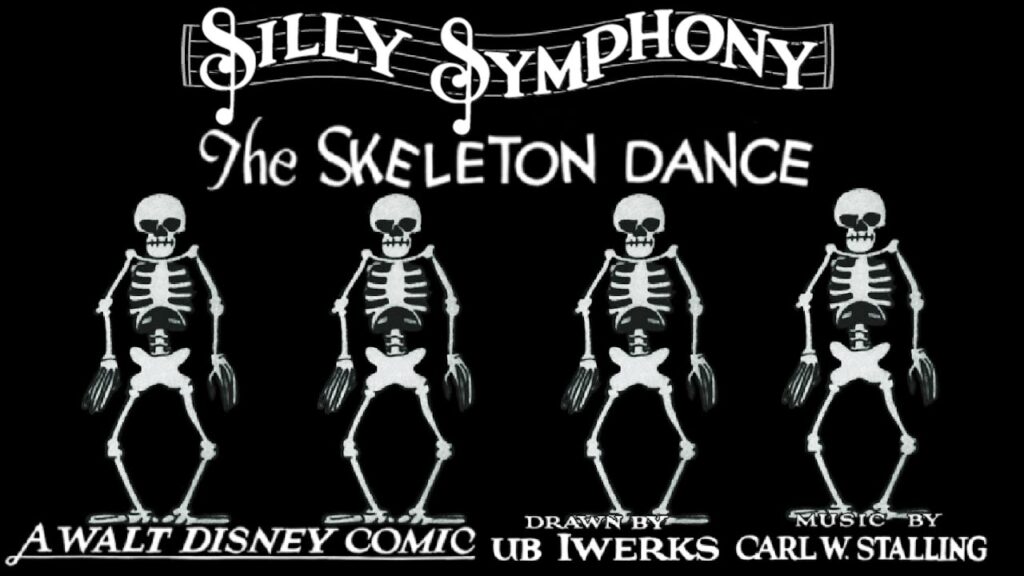
If you’ve spent any time scrolling through TikTok, Instagram Reels, or Pinterest during the autumn months, you’ve undoubtedly run into a very specific, deeply nostalgic aesthetic: four black-and-white, rubber-hose skeletons performing a synchronized, bone-clattering dance in a gothic churchyard.

This iconic sequence comes from Walt Disney and Ub Iwerks’ legendary 1929 short, The Skeleton Dance, the first-ever entry in the Silly Symphony series. For decades, it has stood as a visual masterclass in spooky, whimsical animation.

And as of January 1, 2025, the gates of the graveyard officially unlocked. The original 1929 cartoon entered the US Public Domain.

For gothic apparel brands, indie animators, and digital collage artists, this is an absolute goldmine of vintage spooky assets. However, because this is an early Disney property, navigating its commercial usage requires absolute precision. To protect your brand from corporate legal strikes, you must understand the strict “Silly Symphony Traps” and design with these dancing bones safely.

What Actually Entered the Public Domain?

Under the US 95-year corporate copyright clock, works published in 1929 officially crossed into the public domain on January 1, 2025. For The Skeleton Dance, this means you have full legal permission to copy, reprint, distribute, and remix:

  • The exact visual character designs of the four dancing skeletons.
  • The original film frames, backgrounds, and hand-drawn cell animations from the 1929 short.
  • The overall narrative concept of skeleton physics (detaching limbs, playing xylophone on ribs, and morphing into a giant skeleton).

The Two Great “Silly Symphony” Traps

While the cartoon itself is free, Disney still guards its modern brand assets fiercely. To keep your shop clean, you must dodge these two massive traps:

1. The Modern Disney Branding Trap (Trademarks)

Even when a cartoon’s copyright expires, the trademark of the company that produced it remains protected indefinitely.

  • The Trap: You cannot market your designs, merchandise, or animations using Disney’s active trademarks, logos, or their signature corporate typography.
  • The Rule: Avoid using the words “Disney,” “Silly Symphony,” or “Walt Disney Pictures” on your product listings, apparel tags, or marketing copy. Keep your branding entirely independent (e.g., “Vintage 1929 Rubber-Hose Spooky Tee” or “Retro Gothic Dance Prints”).

2. The Audio Recording Divide

The synchronized soundtrack for the short—composed by the legendary Carl Stalling—famously utilizes Edvard Grieg’s classic composition “March of the Dwarfs.”

  • The Trap: While both Grieg’s composition and the 1929 film’s master audio recording are technically public domain in the United States, international copyright laws regarding sound recordings can vary wildly from country to country.
  • The Rule: If you are distributing a video, game, or song globally (such as on YouTube, Spotify, or Steam), the safest route is to record your own sound effects (clattering wood blocks, xylophones, and woodwinds) matching the public domain Grieg sheet music, rather than ripping the raw 1929 audio track directly.

Creator Blueprint: What You Can and Can’t Do

To protect your business from automated takedown notices, use this strict boundary checklist when drafting your next spooky design project:

What You Can Do:

  • Print film frames on apparel: You can legally print high-contrast screenshots of the skeletons directly onto hoodies, sweatpants, t-shirts, and tote bags.
  • Loop and remix animations: You can clip, loop, and edit the original public domain animation frames to create retro lofi lyric videos, alternative music visualizers, or background assets for website designs.
  • Incorporate skeletons in indie games: You can trace, vectorize, and rebuild these specific rubber-hose skeletons to act as enemies, NPCs, or playable characters in a retro-style video game.
  • Use the original Grieg melody: You can record your own instrumental tracks, beats, or synth arrangements using the chord progressions and melodies from “March of the Dwarfs.”

What You Cannot Do:

  • Use Disney brand identifier fonts: Keep your titles and product typography completely clear of modern Disney-styled fonts or stylized logos.
  • Reference post-1929 Silly Symphony designs: Ensure your source material is strictly pulled from the 1929 short. Do not use characters, colors, or visual styles introduced in Disney’s later Silly Symphony animations from the 1930s or 1940s.
  • Ship internationally without audio clearance: If using the raw 1929 audio track, restrict your distribution to US-only territories to avoid international sound recording copyright conflicts.

Disclaimer: This article documents US copyright law transitions for works published in 1929. International public domain laws vary. This guide is for educational purposes and does not substitute for formal legal counsel.

Are you ready to dance?

The clatter of bones is officially free for creative remixes. Are you planning to drop a grungy streetwear line for the autumn season, or are you creating a spooky indie game?

Filed Under: Cartoons

The Casablanca Trap: Sourcing “As Time Goes By” Legally in 2027

June 25, 2026 by publicdomainwatch

If you are a lo-fi beatmaker, cinematic composer, indie filmmaker, or jazz singer, the holy grail of romantic nostalgia is a single, iconic melody: “As Time Goes By”.

Written by Broadway composer Herman Hupfeld in 1931, the song achieved cinematic immortality as the musical heart of the 1942 film classic Casablanca (“Play it, Sam”). For decades, Warner Bros. and estate publishers have guarded this composition fiercely, charging massive synchronization and publishing royalties to anyone wanting to use its timeless melody.

But on January 1, 2027, the landscape of music licensing changes forever. The original 1931 composition of “As Time Goes By” officially enters the US Public Domain.

Because smart creators are planning their 2027 album drops and video soundtracks right now, this guide breaks down the brilliant creative opportunities this song offers, along with the strict “Casablanca Traps” you must avoid to keep your music legally safe.

What Actually Enters the US Public Domain on January 1, 2027?

Under the US 95-year copyright clock, works published in 1931 are officially unlocking. For this jazz standard, this means the original 1931 composition will be completely free of copyright restrictions inside the United States.

You will have legal clearance to:

  • Perform and record your own cover versions of the song.
  • Chop, loop, or sample your own newly recorded instrumental versions of the melody.
  • Use the original sheet music, chord progressions, and lyrics for profit.
  • Distribute, stream, and sell your cover version on Spotify, Apple Music, and YouTube without paying publishing royalties.

The Three Great “Casablanca Traps” for Musicians

While the 1931 sheet music and melody are unlocking, navigating this specific song requires absolute precision. Warner Bros. still holds a tight grip on the elements introduced in the 1942 film. To protect your tracks from copyright strikes, you must dodge these three traps:

1. The Dooley Wilson Vocal Trap (No Sampling the Movie Audio!)

This is the single biggest trap in music history.

  • The Trap: Dooley Wilson’s legendary performance as Sam singing “You must remember this…” was recorded specifically for the 1942 movie Casablanca. That specific audio recording (the master track) remains strictly copyrighted by Warner Bros. for decades to come.
  • The Rule: You cannot sample the actual movie audio, Wilson’s voice, or the film’s piano track. You must record your own performance or sample a 1931 acoustic recording—such as Rudy Vallée’s 1931 hit version, which does enter the public domain on January 1, 2027.

2. The “Casablanca” Trademark Shield

Even when a song’s copyright expires, movie titles and branding elements can be protected indefinitely under trademark law.

  • The Trap: Warner Bros. holds active trademarks on the title and visual branding of Casablanca.
  • The Rule: While you can release your cover of the song, you cannot market your single or album in a way that suggests it is an official Casablanca product. Avoid using the film’s iconic poster font, silhouette of Bogart and Bergman, or title imagery on your album covers. Keep your branding independent (e.g., “Vintage 1931 Jazz Standard”).

3. The Global Copyright Divide (The Life + 70 Year Split)

Because Herman Hupfeld passed away in 1951, global copyright timelines for this song are split.

  • The Trap: In “Life + 70” jurisdictions (such as the European Union, the UK, and Canada), Hupfeld’s catalog entered the public domain on January 1, 2022. However, in the United States, works published in 1931 had to wait out the full 95-year corporate clock.
  • The Rule: US creators must wait until the stroke of midnight on Jan 1, 2027, to legally monetize or distribute their covers in the US. If you are distributing globally before 2027, ensure your distribution settings restrict US availability until the official release date.

Creator Blueprint: What You Can and Can’t Do

To protect your music or film business, use this strict boundary checklist when planning your next release:

What You Can Do:

  • Record and sell original covers: You can hire a vocalist to sing the timeless lyrics and release the track on major streaming services.
  • Build lo-fi beat tapes using the chords: You can program, loop, or play the chord progression on a rhodes piano, layering it with vinyl crackle and drums for a lo-fi jazz vibe.
  • Use the melody in indie film scores: You can have an instrument play the melody in your video game or movie soundtrack without paying synchronization fees.
  • Republish 1931 sheet music: You can print, format, or sell vintage-styled sheet music prints of the original 1931 layout.

What You Cannot Do:

  • Sample the movie soundtrack directly: Keep your samplers completely clear of any audio ripped from the 1942 Casablanca film.
  • Use film-exclusive dialogue: Do not sample movie dialogue like “Here’s looking at you, kid” or “Play it, Sam. Play ‘As Time Goes By'” in your track, as the film screenplay remains strictly copyrighted.
  • Evoke protected movie branding: Keep your album covers, single art, and video descriptions clear of the trademarked Casablanca name, typography, or character likenesses.

Disclaimer: This article documents US copyright law transitions for works published in 1931. International public domain laws vary. This guide is for educational purposes and does not substitute for formal legal counsel.

Are you ready to play it?

The countdown to 2027 is officially on. Are you planning to drop a smooth lo-fi remix of this legendary standard, or are you arranging a classic vocal cover?

Filed Under: Music

  • « Go to Previous Page
  • Page 1
  • Page 2
  • Page 3
  • Page 4
  • Page 5
  • Page 6
  • Go to Next Page »

Primary Sidebar

Categories

  • Art
  • Books
  • Cartoons
  • Comics
  • Film
  • Folktales
  • Music

Copyright © 2026 · Genesis Sample on Genesis Framework · WordPress · Log in