• Skip to main content
  • Skip to primary sidebar

Public Domain Watch

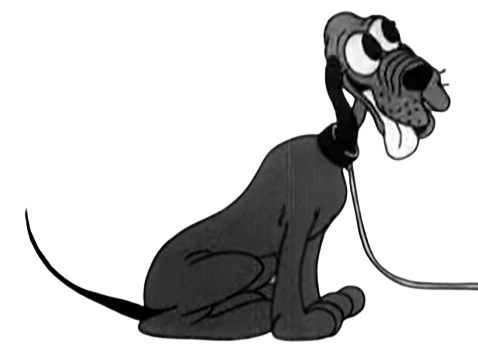
The Pluto Loophole: How to Legally Use Disney’s Famous Hound (Before He Was Pluto)

June 24, 2026 by publicdomainwatch

When Mickey Mouse’s 1928 debut in Steamboat Willie entered the public domain, it triggered a global wave of creative remixes, horror games, and retro merchandise. Creators suddenly realized they could legally play in Walt Disney’s sandbox.

But what about Mickey’s legendary, floppy-eared canine companion?

If you are a graphic designer, animator, or merchandise seller, the answer is a thrilling legal puzzle. As of January 1, 2026, the earliest animated shorts featuring Disney’s most famous hound have officially entered the US Public Domain.

However, if you want to use his likeness in your next commercial project without getting a friendly visit from Disney’s legendary legal team, you must understand a bizarre historical loophole. You can legally use the dog—but you absolutely cannot call him “Pluto.”

Here is how to navigate the ultimate corporate copyright line and design with this classic cartoon canine safely.

The Bizarre 1930 Origins: From Feral Hunter to “Rover”

Unlike Mickey, who debuted with a clear identity, Disney’s famous yellow hound underwent a weird visual and narrative identity crisis during his first year in animation.

In 1930, Walt Disney released two cartoons that are now 100% in the public domain:

  1. The Chain Gang (September 1930): This cartoon marks the character’s absolute debut. However, he wasn’t Mickey’s lovable sidekick. Instead, he appeared as two unnamed, feral bloodhounds hired by a prison warden to track down an escaped Mickey Mouse.
  2. The Picnic (October 1930): He appeared again a month later, but this time he was redesigned as Minnie Mouse’s pet dog, and his name was explicitly “Rover.”

It wasn’t until 1931’s The Moose Hunt (which remains strictly protected by copyright until 2027) that the character was officially named “Pluto the Pup” and became Mickey’s permanent companion.

Because copyright expiration goes strictly by publication date, only the 1930 “Rover” and unnamed bloodhound designs are in the public domain today.

The Ultimate Trap: Copyright vs. Trademark

How can a character’s design be free to use while his name is locked down? It comes down to the fundamental difference between copyright and trademark.

  • Copyright protects the creative work itself (the 1930 cartoon drawings, animations, and frames). Copyrights have a hard expiration date of 95 years for corporate works of this era.
  • Trademark protects brand identifiers (names, logos, and characters used to sell merchandise) to prevent consumer confusion. Trademarks never expire as long as a company continues to use them and defend them in court.

Because Disney actively uses the name “Pluto” on toys, clothing, theme parks, and entertainment, the trademark on the name “Pluto” remains fiercely protected.

If you sell a t-shirt featuring the 1930 dog design and label it a “Pluto Shirt,” Disney can sue you for trademark infringement. But if you sell the exact same shirt and call it a “1930 Vintage Rover Tee,” you are legally in the clear.

Creator Blueprint: What You Can and Can’t Do

To protect your business, use this strict boundary guide when designing your next project:

What You Can Do:

  • Use the 1930 design elements: You can copy, trace, vectorize, and colorize the specific physical designs of the bloodhounds from The Chain Gang and Rover from The Picnic.
  • Sell custom merchandise: You can print these 1930 character designs onto apparel, skate decks, posters, and stickers, provided your marketing and product titles do not use the trademarked name “Pluto.”
  • Write original stories or animations: You can create new cartoons, comics, or video games starring “Rover the Dog,” utilizing his original 1930 rubber-hose style animations.
  • Animate his raw physical traits: You can replicate his early, exaggerated, loose-jointed physical comedy, such as his classic 1930 body-stretching gag.

What You Cannot Do:

  • Use the name “Pluto”: You cannot market, title, or reference your character as “Pluto,” “Pluto the Pup,” or “Mickey’s Dog.”
  • Copy his signature green collar: In the 1930 shorts, Rover did not wear a collar. His iconic green collar was introduced in later, still-copyrighted cartoons. Keep your public domain designs collar-free.
  • Replicate post-1930 personality traits: You cannot use specific expressions, modern color schemes, or narrative elements introduced in 1931 and beyond. Keep your creative source material strictly anchored to The Chain Gang and The Picnic.

Filed Under: Cartoons

Down the Safe Rabbit Hole: Sourcing Alice in Wonderland Assets Without Disney’s Lawyers Chasing You

June 23, 2026 by publicdomainwatch

If you want to create a psychological horror video game, a whimsical brand of organic tea, a dark academia clothing line, or a new fantasy novel, there is one intellectual property that towers above all others as the ultimate creative canvas: Alice in Wonderland.

Originally published by Lewis Carroll in 1865 under the title Alice’s Adventures in Wonderland, this literary masterpiece of nonsense has been in the public domain for generations. Its characters—from the manic Mad Hatter to the philosophical Cheshire Cat—belong entirely to the world.

Because of this, creators have radically remixed her story for over a century. We’ve seen psychedelic rock songs, gritty steampunk merchandise, and gothic video games like American McGee’s Alice.

But if you are planning to build your own Wonderland-themed commercial project, you are stepping onto a legal chessboard. While Lewis Carroll’s world is free, The Walt Disney Company’s highly specific 1951 animated film is not. Here is how to navigate the ultimate “Disney Trap” and design with Alice safely.

The Great Blue Dress Trap: The Myth vs. The Victorian Reality

When you ask anyone to describe Alice, they will tell you the exact same thing: a sweet-faced girl in a bright blue dress with a white pinafore apron, a black headband, and blonde hair.

Here is the twist: That design is owned by Disney.

If you sell merchandise, publish an illustrated book, or release a game featuring an Alice designed with that specific combination of a blue dress and white pinafore, Disney’s legal team has a very strong case against you for copyright infringement.

What the Original Alice Actually Looked Like

In the original 1865 novel, the legendary black-and-white illustrations were drawn by Sir John Tenniel. Because they were uncolored, the dress was open to interpretation.

When the first authorized colored versions of the book were released in the late 19th and early 20th centuries, Alice didn’t wear blue:

  • In The Nursery “Alice” (1889), which featured colored covers hand-checked by Lewis Carroll himself, Alice’s dress was bright yellow.
  • In other early colored editions, she was frequently depicted in red, pink, or olive green.

By choosing a yellow, red, or patterned Victorian dress for your Alice, you instantly bypass Disney’s copyright grip while proving your absolute authenticity to vintage book lovers.

Creator Blueprint: “Can” vs. “Can’t” for Wonderland Designs

What You Can Do:

  • Use the original text and plot points: You can reprint, record audiobooks of, or write direct sequels to Alice’s Adventures in Wonderland (1865) and Through the Looking-Glass (1871). The rabbit hole, the mad tea party, the flamingo croquet game, and the trial are all free game.
  • Use John Tenniel’s original illustrations: You can print Tenniel’s iconic engravings (like the Cheshire Cat sitting in the tree or the Mad Hatter in his 10/6 hat) directly onto merchandise, clothing, and posters.
  • Create dark or radical retellings: You are legally free to turn Alice into a grimdark horror protagonist, an astronaut, or a cyberpunk hacker, provided your designs are derived from the 1865 book and not later protected films.

What You Cannot Do:

  • Copy Disney’s iconic character designs: You cannot copy the pink-and-purple striped Cheshire Cat, the chubby twin designs of Tweedledum and Tweedledee from the 1951 film, or Johnny Depp’s specific makeup and orange-haired look from Tim Burton’s 2010 film.
  • Use copyrighted songs or voice clips: You cannot sample music from the 1951 film (like “In a World of My Own” or “The Unbirthday Song”), or use exact script lines written specifically for the movie adaptations.
  • Evoke Disney branding: You cannot label your product in a way that suggests it is an official Disney product. Your logos, fonts, and tags must look entirely independent.

Are you falling down the rabbit hole?

Wonderland represents a world of limitless imagination that the law has officially set free. Are you planning to design a cozy tea brand, or are you outlining a dark modern graphic novel adaptation?

Filed Under: Books

The Legality of Grid Lines: Can You Copyright Three Colors and a Black Grid?

June 23, 2026 by publicdomainwatch

If you have spent any time studying modern web layouts, Bauhaus architecture, minimalist fashion, or mid-century interior design, you have encountered his work. Even if you didn’t know his name, you know his grid.

Piet Mondrian, the Dutch pioneer of abstract art, spent his life stripping visual art down to its absolute bare essentials: straight black lines, white canvases, and the three primary colors—red, yellow, and blue.

His signature style, known as Neo-Plasticism, is a masterclass in asymmetrical balance. It is also one of the most widely replicated aesthetics in human history. Yet, for decades, independent designers, web developers, and home-decor brands have walked on eggshells trying to reference his style. The Mondrian Trust (which fiercely manages his estate) was notorious for sending aggressive cease-and-desist letters to anyone using vertical and horizontal lines with primary color fills.

But as of January 1, 2026, the grid has officially been unlocked. Mondrian’s most famous and definitive painting, Composition with Red, Blue, and Yellow (1930), has officially entered the US Public Domain.

If you are a web designer, apparel manufacturer, or print-on-demand seller, this is your green light to start creating. Here is how to navigate Mondrian’s public domain entry legally, safely, and beautifully.

The Masterpiece that Defined Modernism

Though Mondrian began painting grids in the late 1910s, his work reached its ultimate, absolute refinement in 1930.

Composition with Red, Blue, and Yellow is the holy grail of his portfolio. By varying the thicknesses of the black lines and the scale of the colored squares, Mondrian created a sense of dynamic energy on a flat canvas. It is clean, mathematical, and incredibly adaptable to modern responsive screen sizes.

Because works from 1930 are now public domain in the United States, you no longer need license clearances or royalties to duplicate, distribute, or print this legendary image.

Creator Blueprint: What You Can and Can’t Do

Working with Piet Mondrian’s style in 2026 is highly lucrative, but you must know where his estate’s legal grip ends and the public domain begins.

What You Can Do:

  • Print and sell the original 1930 works: You can legally print Composition with Red, Blue, and Yellow directly onto canvas wraps, poster prints, area rugs, socks, phone cases, and coffee mugs.
  • Build web layouts using his exact grid ratios: You can code CSS Grid and Flexbox website layouts that mimic his signature proportions and primary color block placements.
  • Alter and remix his color blocks: You can take his original black-line compositions and swap his primary palette for pastels, neons, or metallic gradients to fit modern branding trends.
  • Digitize his brushstrokes: You can isolate the subtle textures and oil canvas grains from high-resolution scans of his 1930 works to use as design textures.

What You Cannot Do:

  • Infringe on active corporate trademarks: While the art is free, trademarks don’t expire on a fixed clock. You cannot launch a home decor brand called “The Piet Mondrian Collection” or use his signature as a logo to fool consumers into thinking your products are officially licensed museum merchandise.
  • Replicate later protected designs: Some of his highly complex, late-career works—like Broadway Boogie Woogie (1943)—remain protected by copyright for several more years. Keep your direct reproductions strictly anchored to works published in 1930 and earlier.

Disclaimer: This guide focuses on US copyright law transitions for works published in 1930. International laws vary, particularly in countries with “Life + 70 Years” terms where Mondrian’s entire catalog entered the public domain in 2015. This article is for educational purposes and does not constitute formal legal counsel.

Over to You

Mondrian believed that his art represented a universal harmony that belonged to everyone. Ninety-six years later, the law finally agrees with him.

Are you going to use these clean grids to design a modern website layout, or are you planning a minimalist print-on-demand home decor collection?

Filed Under: Art

The Catch-22 of Public Domain Music: Why You Can’t Sample Ray Charles’ “Georgia on My Mind”

June 23, 2026 by publicdomainwatch

For music producers, beatmakers, and independent filmmakers, finding out a legendary song has entered the public domain feels like winning the lottery. No expensive sample clearance, no royalty payouts, and zero risk of automated copyright takedowns on YouTube or Spotify.

And as of January 1, 2026, one of the most soulful, recognizable melodies in American history officially crossed into the US Public Domain: Hoagy Carmichael and Stuart Gorrell’s 1930 masterpiece, “Georgia on My Mind.”

If you make music—whether you loop lo-fi hip-hop beats, score indie films, or record acoustic covers—the composition of this classic song now belongs to you. You are legally free to perform it, alter it, and monetize it.

But if you are getting ready to download the legendary Ray Charles version and slice it up in your sampler, stop right there. You are walking directly into the ultimate Catch-22 of music law. Here is why sampling that track will still get you sued, and the exact clever workaround modern creators are using instead.

The Two Copyrights Hidden in Every Track

To understand the music copyright trap, you have to realize that every song you stream, buy on vinyl, or hear in a movie is actually protected by two completely separate copyrights:

  1. The Musical Composition (The Underlying Work): This covers the sheet music, the lyrics, the melody lines, and the specific jazz chord progressions. This was written in 1930 and is now 100% Public Domain.
  2. The Sound Recording (The Master Track): This covers the actual physical audio waves captured by a microphone onto tape, vinyl, or digital files.

Why Ray Charles is Off-Limits

The definitive, heartbreaking version of “Georgia on My Mind” was recorded by Ray Charles in 1960.

Because his physical master recording is protected by an entirely different copyright timeline, Ray Charles’ vocal stems, brass sections, and piano tracks are NOT in the public domain. If you clip a two-second snippet of his voice singing “Georgia…” from a digital file, you are committing copyright infringement. The exact same rule applies to Willie Nelson’s iconic 1978 country cover.

The Pro Workaround: Recreate the Progression

If you cannot sample the 1960 master recording, how do you utilize the public domain status of the song? You rebuild it yourself from the original 1930 skeleton.

Because the composition is completely free, you can legally re-record the melody, hire a session singer to perform the exact 1930 lyrics, or program the chord progressions using your own software instruments, synths, and samplers.

The True Loophole: Slicing Pre-1926 Vinyl

If you are a purist who refuses to program MIDI and absolutely insists on chopping up raw, crackling audio files, you still have a powerful legal loop to use.

Under the 2018 Music Modernization Act, actual physical sound recordings follow a strict 100-year expiration clock in the United States. On January 1, 2026, all physical audio recordings published in 1925 and earlier officially entered the public domain.

While you can’t touch Ray Charles (1960), you can hop over to the Internet Archive’s “Great 78 Project” or the Library of Congress, unearth acoustic jazz, delta blues, and orchestral shellac recordings from 1925, and slice, loop, chop, and distort those audio clips completely clearance-free.

Creator Blueprint: What You Can and Can’t Do

To keep your music production business legally safe, keep these strict boundaries in mind when working with the track:

What You Can Do:

  • Record a fresh cover version: You can legally record a lo-fi, R&B, rock, or acoustic cover of “Georgia on My Mind” and monetize it on streaming platforms like Spotify or Apple Music. Because the song is public domain, you fully own your brand-new master recording.
  • Use the original lyrics: You can use Stuart Gorrell’s original 1930 lyric text (“Georgia, Georgia, no peace I find…”) in your own original tracks or spoken-word projects completely free of copyright restrictions.
  • Utilize MIDI chords: You can download a 1930 MIDI pack of the song’s chord changes, load it into your DAW, and use it to build a completely new song. MIDI files mimic the open-source composition layout without touching any protected audio waves.
  • Rearrange the composition: You can slow the tempo down, speed it up, change the key, or alter the style of the arrangement to fit modern electronic, pop, or hip-hop production styles.

What You Cannot Do:

  • Chop the Ray Charles master: You cannot cut a 4-bar piano loop or slice vocal snippets straight out of Ray Charles’ famous 1960 vinyl or digital track. That master recording remains strictly protected by copyright.
  • Sample later famous covers: You cannot sample audio elements from Willie Nelson’s 1978 version, Michael Bolton’s 1990 cover, or any other rendition recorded after 1925.
  • Claim exclusive ownership of the melody: While you own your new performance of the song, you cannot file a copyright claim against other creators who use the same melody or chords, as the underlying composition belongs to the public.

Filed Under: Music

Can You Legally Sell the Mona Lisa? The Tricky World of Fine Art Public Domain

June 23, 2026 by publicdomainwatch

If you have ever scrolled through Etsy, Shopify, or high-end interior design blogs, you have likely seen them: beautiful canvas prints of historic oil paintings, minimal graphic tees sporting Renaissance sketches, and phone cases featuring moody, century-old landscapes.

Selling physical or digital products featuring classic art is a massively popular and lucrative side hustle. And mathematically, it makes perfect sense. Leonardo da Vinci passed away in 1519. Because copyright protection generally lasts for the life of the creator plus 70 years, his original masterpieces—from the Mona Lisa to his intricate scientific notebooks—have been in the public domain for centuries.

So, can you legally print the Mona Lisa on a t-shirt, market it, and sell it for profit? Yes.

But can you get sued for doing it? Also yes.

Welcome to the tricky, often misunderstood world of fine art public domain. If you want to use Leonardo da Vinci’s genius to fuel your modern design business, you have to navigate the notorious “Museum Loophole.” Here is how it works, and how to stay completely safe.

The Legal Plot Twist: The “Museum Loophole”

While Leonardo’s actual brushstrokes belong to all of humanity, the high-resolution digital photograph of those brushstrokes is where things get messy.

For years, major international museums have operated as physical and digital gatekeepers. Because they own the physical canvas of a painting, they control who enters the room with high-end camera equipment. Many institutions take their own ultra-high-resolution digital scans of these public domain works, host them on their websites, and then slap a copyright symbol or strict “Non-Commercial Use Only” terms of service on the digital file.

This creates a legal illusion. They aren’t copyrighting Da Vinci; they are attempting to copyright the photograph of Da Vinci.

The Landmark Lawsuit You Need to Know

Fortunately for creators, United States courts tackled this exact issue in the landmark federal case Bridgeman Art Library v. Corel Corp. The court ruled that “slavish reproductions” of two-dimensional public domain artworks lack the original creativity required to qualify for a new copyright. In plain English: taking a perfectly flat, accurate photo of a flat public domain painting does not create a new copyright. The digital file remains just as free as the canvas.

However, museums frequently bypass this ruling using Contract Law. If you download a file directly from a museum’s site after checking a box that says “I agree to use this file for educational purposes only,” you have signed a binding digital contract. If you then use that file to sell merchandise, you can be sued—not for copyright infringement, but for breach of contract.

The “Can” vs. “Can’t” Guide for Da Vinci Assets

To protect your design business, you must separate Leonardo’s 2D paintings from his other creative outputs.

You CAN:

  • Print and Sell 2D Masterpieces: You can freely replicate, remix, and sell products featuring the Mona Lisa, Ginevra de’ Benci, or The Last Supper, provided you source the digital file from an open-access archive that doesn’t restrict commercial downloads.
  • Remix His Text and Inventions: You can isolate his incredible backward-written Italian script or his blueprints for flying machines and helicopters, turning them into transparent vectors for streetwear or digital planners.

You CANNOT:

  • Use Photos of 3D Sculptures or Exhibits: If a museum takes a photograph of a three-dimensional object—like a physical model built based on Da Vinci’s blueprints, or a marble statue—that photograph is protected by a new copyright. Why? Because the photographer had to choose lighting, angles, and depth of field, which introduces human creativity.
  • Scrape Restricted Sites: Do not bypass security or ignore the explicitly restrictive terms of service on private museum archives.

Over to You

The grand masters belong to the world again. Are you planning to use Da Vinci’s sketches to build a moody aesthetic clothing brand, or are you looking to print classic art for your own home decor?

Filed Under: Art

  • « Go to Previous Page
  • Page 1
  • Interim pages omitted …
  • Page 3
  • Page 4
  • Page 5
  • Page 6
  • Go to Next Page »

Primary Sidebar

Categories

  • Art
  • Books
  • Cartoons
  • Comics
  • Film
  • Folktales
  • Music

Copyright © 2026 · Genesis Sample on Genesis Framework · WordPress · Log in